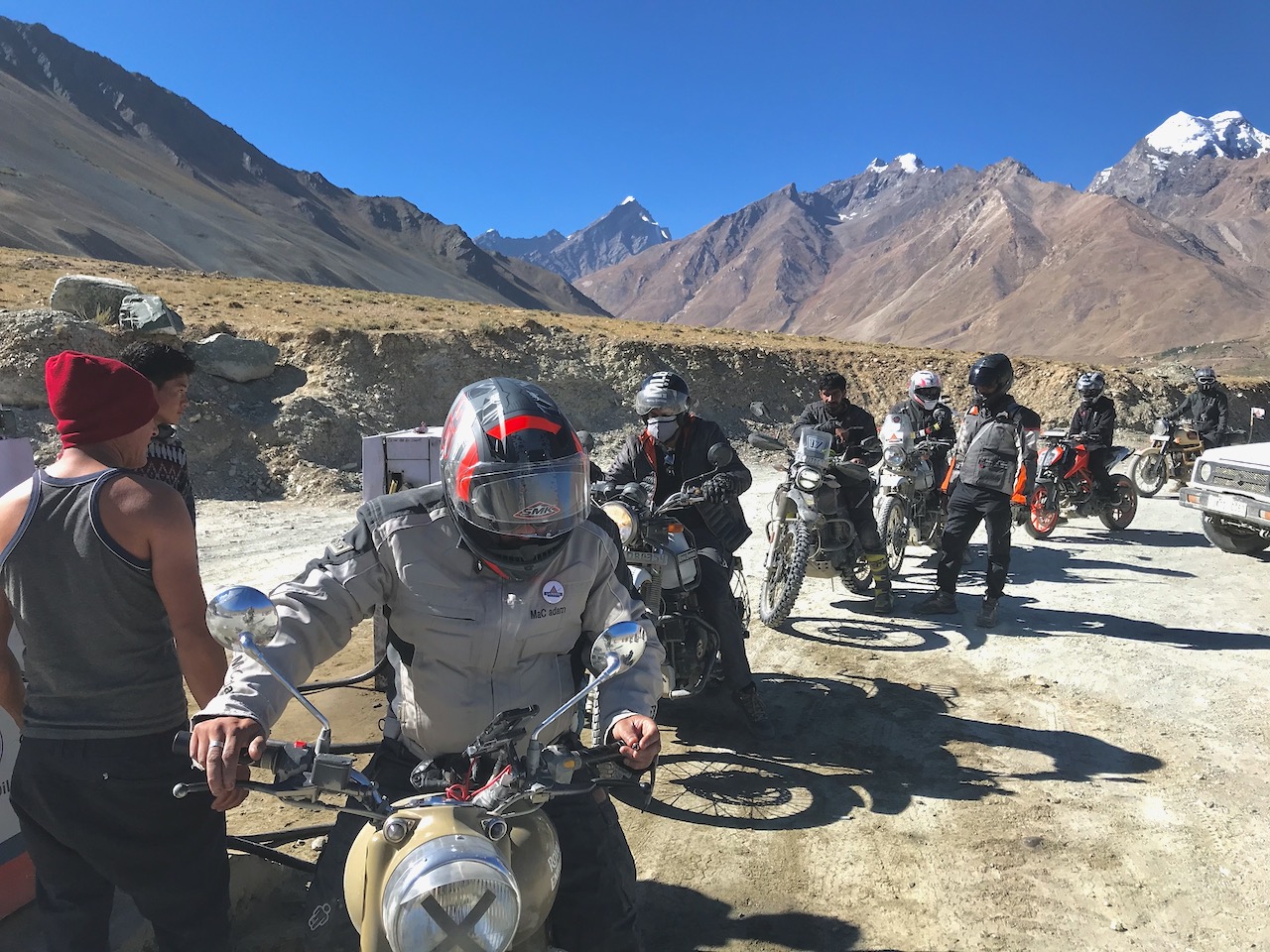
Here’s a video I compiled from my six-day expedition through the Zanskar Range of the Himalayas with LA Riders motorcycle club. The trip included high-altitude camping, music, and crossing three of the world’s highest motorable passes.
In the middle of the trip we stopped for a trek and bridge crossing to reach Phuktal Gumpa, the secluded cave monastery which has been visited by monks for 2,500 years.
Be sure to turn up the sound and click on HD in the player.
Content is from my old iPhone 7 camera, and the drone and gypsy videos are from LA Riders, Ladakh Motto Adventures, and Black Sheep Motto Adventures.
Follow them on IG for more kickass videos and info about moto tours through Ladakh and Himachal:
April Ananda Bliss is a tiny, tattooed faerie who can fly three times as high as Michael Jordan. Originally from Colorado, April left the U.S. at age 20 to spread her love of fire dancing and hula hooping around the world.
She spent the next several years hitchhiking cargo boats in the Peruvian Amazon, couchsurfing the slums of Nairobi, and distributing hula hoops to kids across Africa.
April was initiated further into the world of circus in Southeast Asia, learning aerial arts and stilt walking in Thailand and performing in Burmese refugee camps.
She reached India in 2010 on a path of spiritual awakening and discovered a perfect climate for her and her global circus friends to train during winters.
Thus she opened Bliss Circus in 2016, building her first structure off the beach in South Goa. In 2019, April moved Bliss to its current location set in a magical faerie forest in Palolem with a full stage and eight-meter-high rigs, becoming the only full-on adult circus in India.
I was lucky to spend three weeks training with April and her amazing instructors, learning trapeze, silk ropes, and partner acrobatics. That was before a motorcycle accident sidelined me. But I finally got the time to sit down with April to discuss Bliss Circus and its decidedly dark side vibes. Hope you enjoy the interview, ya’ freaks!
Renegades Logbook: I’ve never been able to say this to anyone, but you can fly. What does it feel like?
April Ananda Bliss: When I was a kid I used to lay on my lawn and dream about flying in the clouds. It’s exciting, it’s scary, and it’s like a dream come true to actually fly. It’s like being fuckin’ Peter Pan!
(April flying high above the Bliss Circus stage)
How dangerous is aerial arts?
Even if you are a high-level trained professional you can make mistakes. And if you make a mistake in aerial working at height, you can break your neck, you can break your spine, or you can die. There have been big accidents in Cirque du Soleil, which is the largest contemporary circus in the world, where artists died. One movement that’s slightly off can send you crashing to your death. We try to do dangerous things with the most amount of safety as possible. It’s all about calculated risks.
You’re also a mermaid. How did that character come about?
I have a dear friend who is a mermaid and was creating a show at Boom Festival in Portugal, the largest electronic music festival in Europe. I had never mermaided before, but I got the tail, learned how to swim, and was initiated with nine mermaids in the lake at sunset at Boom Festival.
(April mermaiding at a pool party in Goa)
Does your mermaid have a name?
Kali. She’s named after the Indian Goddess of Destruction. I am the dark, Indian mermaid and I always wear skulls in my hair when I’m mermaiding.
Many of your circus performances explore the dark side with black outfits, devilish characters, and fire dancing. Why do you like to explore these themes?
An important part of our reality is the dark. Living in India has such an appeal for me because in a lot of the world we are sheltered from darkness, and when darkness happens people are in shock and don’t know how to handle it. Living in Asia the light and the dark are very incorporated here.
(Josh and Judy performing “The Puppet Master”)
You mean all aspects of the human condition are in front of your face?
Yes. You have most beautiful smell and the worst smell in the same whiff. You can see the most beautiful thing you’ve seen in your entire life and the most terrible, shocking thing in the same day. It’s very real and it makes me feel alive. Expressing that with performance art is important because it’s not all light and faeries. The dance between the light and the dark has been a recurring theme in my art. I love the dark goddesses and festivals honoring the dark.
You accept all ages of students and performers in Bliss Circus?
Yes. My daughter is ten and has been performing since she was three. And we have students and instructors in their 50’s. People who want to pursue it have to be really motivated, hardworking, and have a good tolerance for pain.
There is a Renegade vibe to the circus and your performers. Do you feel that?
In a lot of countries the circus is part of the established art society. Here in Goa, it’s different. Yes, I am a woman running a business in a foreign country. And I play by the rules in the sense that I follow the laws and keep people safe. But in every other way I am not playing into the mainstream. I consider myself subculture.
People used to talk about ‘Running away to join the circus’, is that still the case?
That saying came from the Barnum & Bailey days where circus was more about the freak show and the people who couldn’t exist in society … whereas I don’t want to. It wasn’t that I ran away with the circus. I ran away from mainstream American society, and then I found circus.
(My first successful drop from the silk hammock at Bliss)
How can people see Bliss Circus?
We run from November to March every year with shows once or twice a month. We also host workshops and retreats, artist residencies, and intensive aerialist foundation courses. Our last show of this year is March 26 in Palolem, Goa.
Jiddu Krishnamurti is a Jedi Master of the First Order.
Born in India in 1895, Krishnamurti was a philosopher, writer, and global speaker on topics of psychological revolution.
I had never heard of him until I came to India. In fact, I don’t recall any Indian authors being on my high school or college reading lists, which is clearly some sort of Western Colonialist cover-up.
But fear not, Renegades Logbook is here with its first book review.
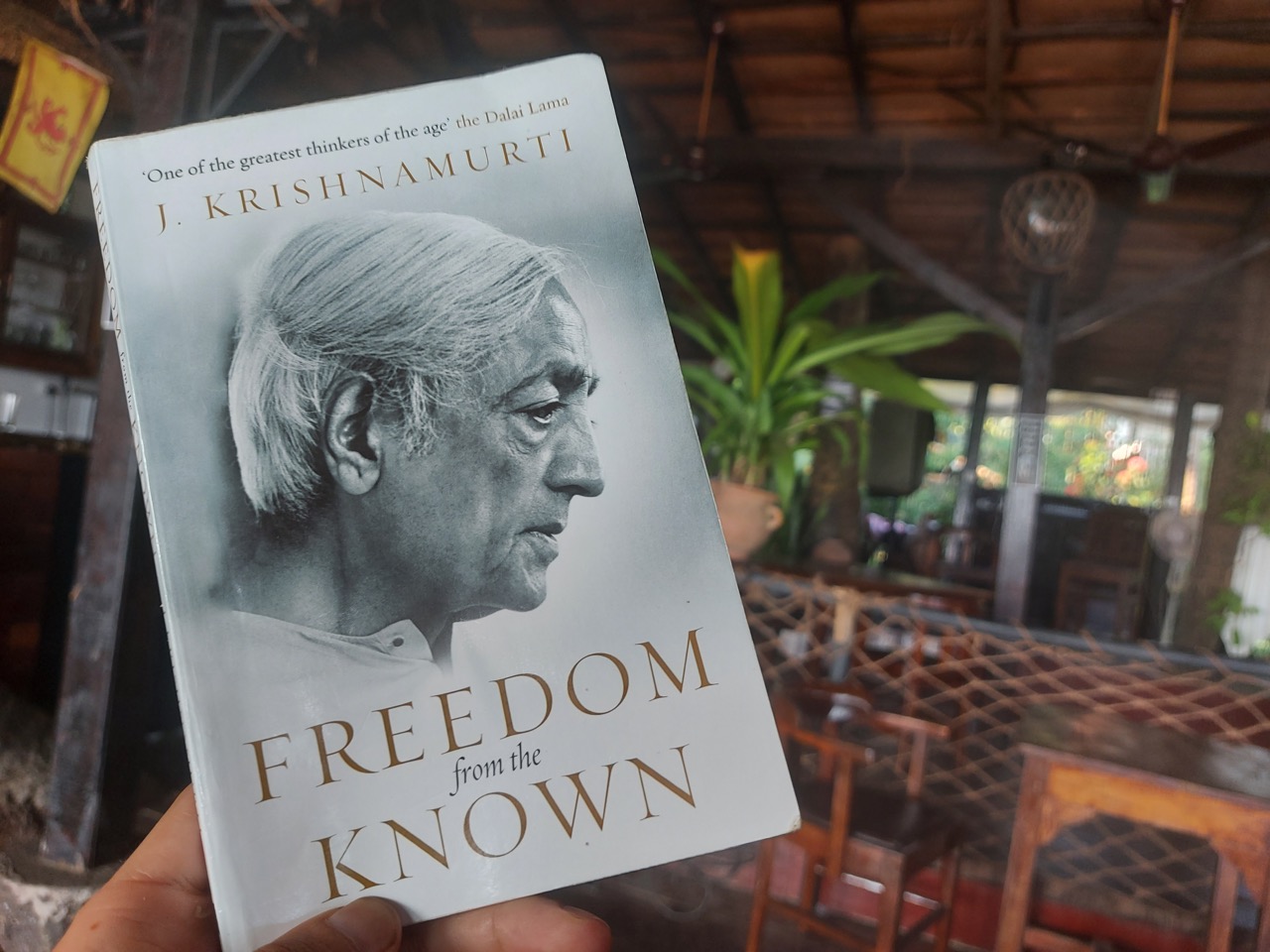
Krishnamurti’s Freedom from the Known is an exploration of total freedom, the thing people claim to want, or believe they already have, but will never achieve because they are trapped within their societies and fears.
It’s a short book at 129 pages, but finishing just one chapter is like getting hit in the head with a baseball bat, waking up and thinking, “What the fuck was that?”
What is total freedom?
According to Krishnamurti, to be free you must first abandon all authority including your society, nationality, religion, position, family, and teachings.
These authorities all breed competition, jealousy, greed, acquisitiveness and ideals of right and wrong. And when you are free, there is no right and wrong, he writes, accurately.
“All authority of any kind, especially in the field of thought and understanding, is the most destructive, evil thing. You have to be your own teacher and your own disciple. You have to question everything that man has accepted as valuable, as necessary.”
Now I see why he’s not on the academic reading lists.
“To be free of all authority, of your own and that of another, is to die to everything of yesterday, so that your mind is always fresh, always young, innocent, full of vigour and passion. It is only in that state that one learns and observes,” he writes.
In other words, you need to be a psychological solo-traveler.
“If you do not follow somebody you feel very lonely. Be lonely then. Why are you frightened of being alone? Because you are faced with yourself as you are.”
So what are you afraid of?
Do you know your own fears? Fear of not having enough money, of losing your job, of what people think of you, of not being a success, of not being loved, of your partner leaving you; of the anxiety in your head, of utter boredom, fear of your own body growing old and alone, and contracting diseases and death.
“Living in such a corrupt, stupid society as we do, with the competitive education we receive which engenders fear, we are all burdened with fears of some kind,” Krishnamurti writes.
“And what do you usually do about your fears? You run away from them, don’t you, or invent ideas and images to cover them? But to run away from fear is only to increase it.”
First we must face the concept of pure fear itself.
“Can you look at your fear without trying to resolve it – actually look at it and not try to escape from it – perceive total fear, not what you are afraid of?”
“Can you watch fear without any conclusion, without any interference of the knowledge you have accumulated about it? If you can than you are watching fear for the first time.”
Only once you face pure fear, can you seek pure freedom.
What are you searching for?
There’s something out there. Maybe it’s freedom, or love, or a sexual-spiritual awakening to fill the emptiness in your heart. You can’t really define it but you’re searching for it. How do you invite it in?
“You cannot invite it,” he writes. “To invite it, you must know it, and you cannot know it. It doesn’t matter who says it, the moment he says, ‘I know’, he does not know. The moment you say you have found it you have not found it. If you say you have experienced it, you have never experienced it.”
Jiddu: such a savage writer.
“The moment you have achieved anything you cease to have that quality of innocence and humility; the moment you have a conclusion you are translating every living thing in terms of the old,” writes Krishnamurti.
When I flew into Ladakh last fall, I had no phone, no friends, and no plans there other than to rent a motorcycle and explore the Himalayas.
On my first day out I rented a bike and rode straight into the desert alone. After an hour or so, I found some mountains that looked like the surface of Mars.
“I’ll never ride a bike on Mars,” I thought to myself. “Fuck it, let’s give this a shot.”
I rode up the mountainside until it was too steep for my bike. It was hot and I had no water or sunscreen, so I tied my shirt around my baldhead and trekked further.
Then I spotted a village in the distance with a Tibetan Buddhist monastery atop a hill.
I rode there on my hot bike and when I arrived, the monks gave me water and invited me in to the monastery to meditate. An old monk stared at me for five minutes straight, as I was likely the first foreigner to visit all year during COVID.
The next day I went to downtown Leh and met a Russian girl named Vera in line at the ATM. We got coffee and I told Vera about my bike adventure. She grabbed my shoulder and said, “Take me.”
Thus ended my solo trip.
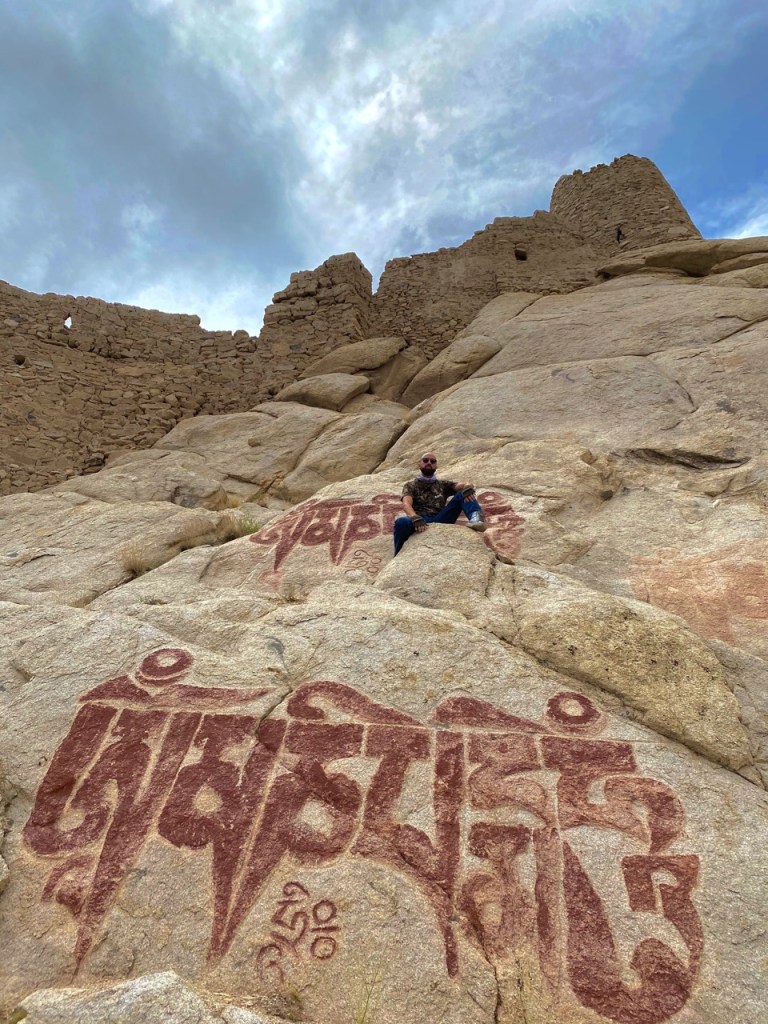
Vera and I quickly became friends, exploring ancient monasteries and ruins around Ladakh for a full month. And unlike my phone-less ass, Vera had an iPhone 11, which we used to take these crazy pics.
Vera later left and I joined a motorcycle club for an epic off-road adventure in Zanskar, which I chronicled in a previous blog.
Why am I writing all this? It’s a prime example of a solo-trip that turned into companionship: a non-mutually exclusive travel phenomenon.
Would I have attempted these crazy expeditions and made the new friendships if I was traveling with some friends, or a girlfriend, or wife? I’d say 95 percent of the time the answer is no.
Does going solo make the best trip?
“I don’t mind traveling with a companion sometimes, but solo travel is bloody liberating. I love the freedom of making my own plans, without having to wait on someone else. I change plans frequently too, depending on how I’m feeling on any given day.” – Mitsu from Goa
“When you are a solo traveler you can chose when, where and who to go with. And you can change places, partners or whatever, whenever you want. Long story short, it gives you the FREEDOM.” – Vera from Russia
“For the last five years I have been traveling solo and the best part is freedom. It makes you mentally strong, widens your horizon of thoughts, and triggers your creative instincts. ” – Sourav from Patna (aka RovingLama)
“Solo traveling is an experiment in dealing with the ultimate human fear: solitude. I prefer a travel companion who is just right, gives you space, doesn’t need to be in your face always, but has a good synergy with you.” – Nanditha from Bangalore
“The only thing better than solo traveling is solo traveling with no phone, because then no one can message you. That’s freedom.” – The Editor, Renegades Logbook.
While traveling through India for the past year I’ve dated several Indian girls and even found myself in a few serious relationships.
During the first part of my trip I wasn’t expecting anything too serious, just fun. And there’s plenty of opportunities for that while traveling. But it seemed that every time I really connected with someone, they would leave the next day on their flight home to Mumbai, or Bangalore, or Delhi.
Sometimes I process this internally and ask myself, “Am I just the American guy the girls have a fling with on their last day?”
And if so, do I mind?
It’s complicated.
After a year of traveling, I’m now more interested in finding real relationships and love. I’m no longer afraid to travel long distances to pursue someone I met earlier, and I believe this to be a major point of personal-emotional growth.
Plus it’s much more important to have someone special when you haven’t seen your family or friends back home for a full year. But I also have pursued someone I was not compatible with who was too young for me, on what my friends called a “doomed mission.”
So perhaps I’m not ready for true love but rather just the experience of having a girlfriend in a foreign country. With that, I get a tour guide (with benefits) to take me around and make sure I get the best deals, food, and access to parties.
In exchange, she gets an American boyfriend for a few weeks (or months depending on how it goes) to enjoy a different cultural experience with, and to show off to her friends.
The major issue is the same: I am a traveler. Eventually my visa will expire and I will leave. I know this, and she knows this, and her friends know this. So we just keep an unspoken agreement that we won’t take things too far … and therefore no one gets their heart ripped out.
But it’s not true love if you can’t get your heart ripped out. Just listen to any Tom Petty song and he’ll tell you.
Regardless, searching for travel love has been a good experience for me. It’s a sort of romantic pragmatism shared by two people in motion who don’t want to be lonely, but who also don’t want to be tied down.
And most people I have dated understand this. I’ve never had anyone ask me to stop traveling. They will say, “Keep going. Keep doing it. I will be so sad when you leave and I will never forget you, but please don’t stop traveling.”
Online Dating No Longer Necessary, My Friend
The best development for me is that I haven’t needed to use online dating for more than a year. Meeting people organically while traveling is so much more exciting and rewarding to me.
I’ve met people while swimming in the sea, while on a nature cleanup, in a yoga school, and of course in various hostels and parties.
I’ve found that these relationships start with more flame and fewer expectations than the forced, “Let’s meet up for drinks and apps at this bar,” that you go through on Tinder, or Bumble, or Hinge, or whatever.
A good travel date proposal will go something like, “Let’s ride the motorcycle to a hidden lagoon, get really high, and float on our backs together. Just you and me [insert inappropriate emojis]”
That’s what traveling is all about: foreigners connecting in raw nature with no filter.
Swiping through an online pool of familiar people in your town is 2D dating. Going out there and meeting a local person in a foreign country is 3D dating with enough 4D twists and turns to make your head spin.
Am I on Some Extended Vacation?
Some people, specifically my little brother, have tried to dismiss my long solo trip as an “extended vacation,” but I assure you it’s not.
On vacation you don’t have time to learn anything about yourself. You unplug from work and try to forget everything about yourself.
That’s why companies only give you a few weeks vacation per year. It’s just enough time to recharge your batteries for more work, but not enough time to question your entire reality and try to shift it in a new direction.
While traveling a foreign country for a whole year you will learn crazy things about yourself, and you will barely recognize the old you when browsing through pictures.
You will have the time to explore alternative realities and lifestyles. You will be forced out of your comfort zone. You will get really, really high and journey inward.
You may even fall in love and have the luxurious, opulent, unconstrained time to process everything and write about it.
Is your natural habitat somewhere between a laser and a fog machine?
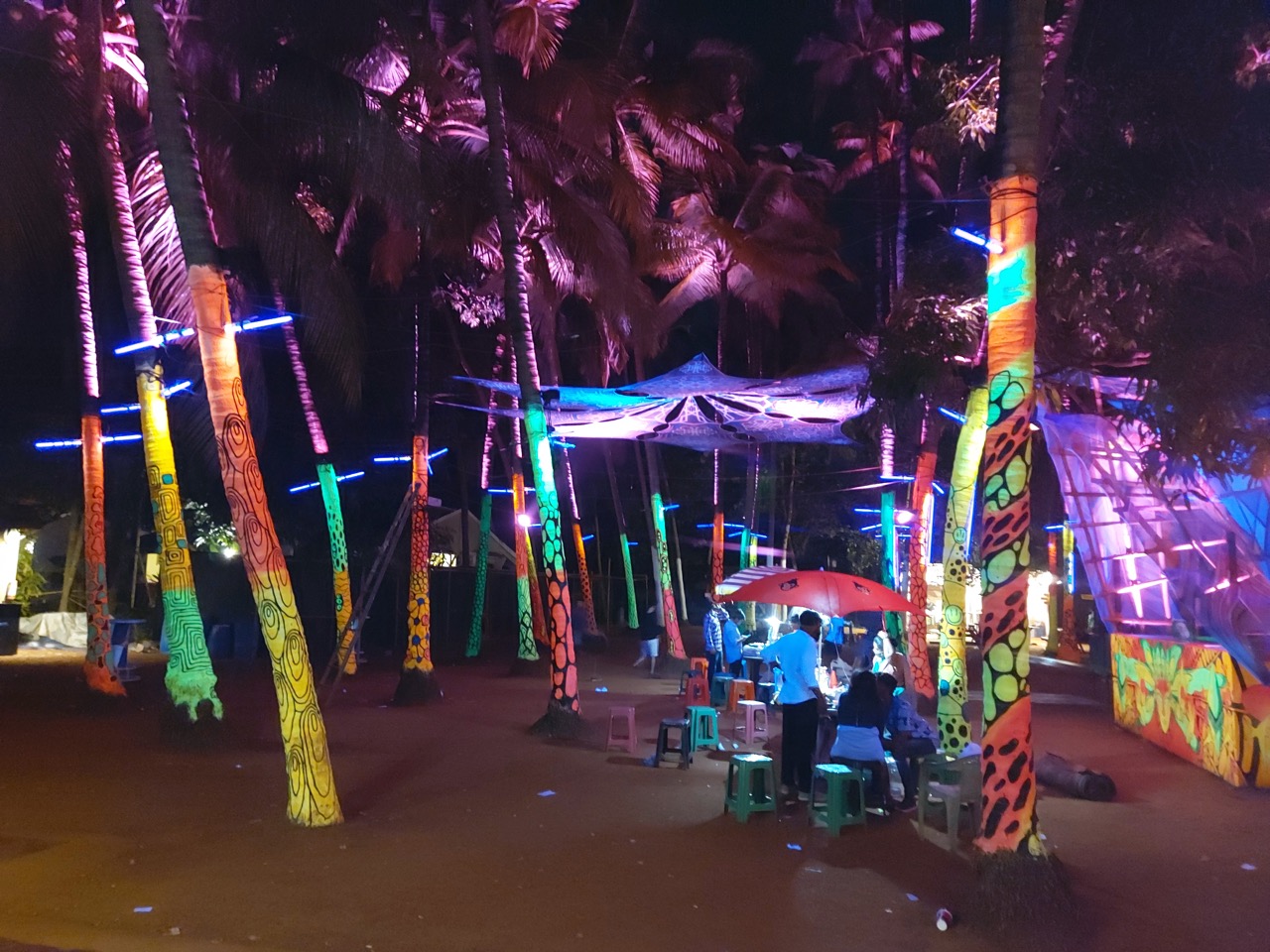
Why not upgrade to lasers and fog machines mounted on palm trees overlooking the Arabian Sea?
Just plan a trip to North Goa during the next holiday season. It’s a never-ending rave party from December through January featuring underground techno and psychedelic music, with few corona restrictions. Actually, come anytime of the season, but the holidays have the best weather, crowds, and DJs.
I just made my third trip to Goa with friends from Dec. 23 through Jan. 6. We went until at least 7 a.m. each morning and sometimes for two to three days straight fullpower, no toilet, no shower.
How to survive such a schedule of hedonism?
#1 – Form a Crew
(Members of our crew Akshata, Manish and Ashraf somewhere around Goa)
During 14 days of raving things will get crazy. Get a tight crew of four to eight people to look after each other with lots of TLC.
In terms of roles, someone needs to be in charge of acquiring substances to keep the crew going all day and night. Another must be in charge of sorting free or discounted entry at the clubs to keep the budget in tact.
Most importantly someone needs to be the Rave Mom, ensuring that everyone is hydrated on the dance floor and no one is left behind. Your crew can swap partners and roles as the party progresses.
#2 – Get Bikes
Goa is a tropical place with venues located in beaches and jungles, reachable only by sketchy dirt paths. There’s no Uber to pick your stoned ass up so you need to get bikes.
The best option is to rent a Royal Enfield, a heavy metal machine that can rip through the jungle or beach, making for a dramatic entrance. Second best is a Scooty, which has storage under the seat where you can stash beer to drink en route to the next party.
(Me and Richie re-fueling the Royal Enfield Classic 350)
#3 – Keep BouncingAround
During the 14 days your mission is not to attend 14 parties – the mission is to attend 75 parties. Possible my friend? “Sab kuch milega” is the official Indian party mantra meaning, “Anything is possible.”
Get up around 2 p.m. (standard Goa wake-up time) then head to a hostel like Pappi Chulo for some joints, snacks and beers. Next move to a friend’s villa or resort and get classy with some mixed drinks for sunset.
Then get on the bikes and bounce around to a few cafes or small clubs to catch the right vibe. Don’t forget to eat dinner and stop at the market if you are in charge of substances.
After 1 a.m. hit the main techno clubs like Chronicle and Larive on Ozran Beach and occupy the dance floor until 7 a.m. Finally, head to a sexy spot for sunrise. Or you could keep partying in the trance clubs, which play until 11 a.m. … if you are a lunatic.
(Black Coffee spinning at Namascray Experience at 9 Bar near Vagator Beach)
(Day 13: Still dancing fullpower at Curlie’s on Anjuna Beach with Richie, Manish and Sam)
#4 – Pop
Sugar, spice, and everything nice. These were the ingredients chosen to create the perfect girl.
But Professor Utonium accidentally added an extra ingredient to the concoction… CHEMICAL X. Thus the Powerpuff Girls were born!
#5 – Fall in Love
Now you’ve got your crew, bikes, and parties … but what good is it all without that special someone to share a synchronized rave dance with at 3 a.m.?
It’s Goa. Fall in love and create memories that will last forever.
*** FULL DISCLOSURE: Your actual memory will not last forever if you keep this up. Be sure to take pictures, notes, and videos — upload them digitally –and share them with your crew. And make sure to rest, detox, and eat healthy after all the raving … then repeat.
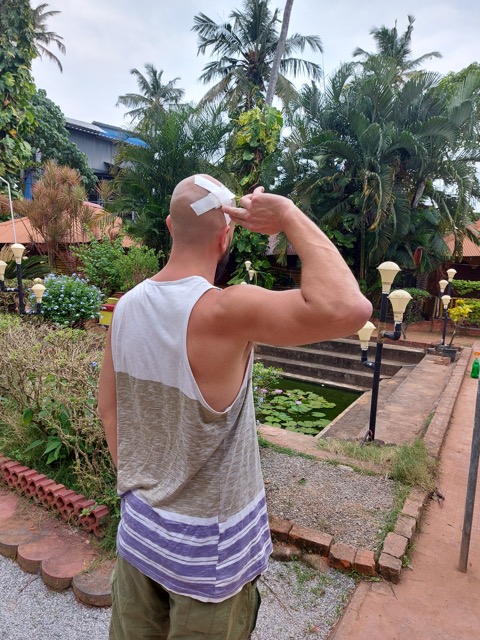
While traveling I get lots of injuries but this is a really stupid one. Got gashed by the ceiling fan in my guesthouse when I stood up on the bed at night. You see being tall is not always so good.
There was lots of blood spilling from my bald head. Luckily some Indian guys next door helped me patch it with my medical kit in the bathroom. A good medical kit is a necessity for traveling, and I’ve used mine and re-filled it at least three times.
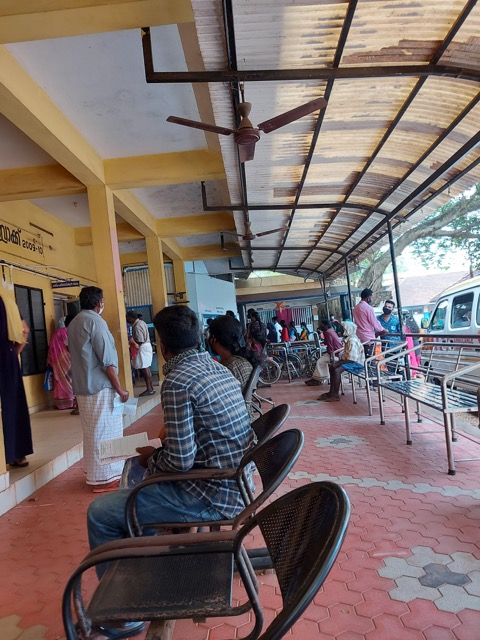
The next morning I visited the emergency room at Taluk Government Hospital in Varkala, which is the southmost tip of India. It was a Monday morning and lots of people were there but I got seen and professionally patched up in about 45 minutes.
(Taluk Government Hospital in Varkala)
The facilities were a little sketchy, with some WWI-era equipment and there was a garbage fire burning nearby. But the doctors were fast and thorough and the price can’t be beat:
5 rupees — thats just 7 cents U.S.!!!
Compare that to $200 I paid last time to visit ER in Boston. That means U.S. price is 2,857 times the India price. Note that India actually has universal free health care, U.S. just claims to have universal health care.
I also got treated for a previous wound and prescribed antibiotics and cream, all inclusive of the 5 rupee price.
INDIA X-RAY COSTFOR PRIOR MOTO CRASH
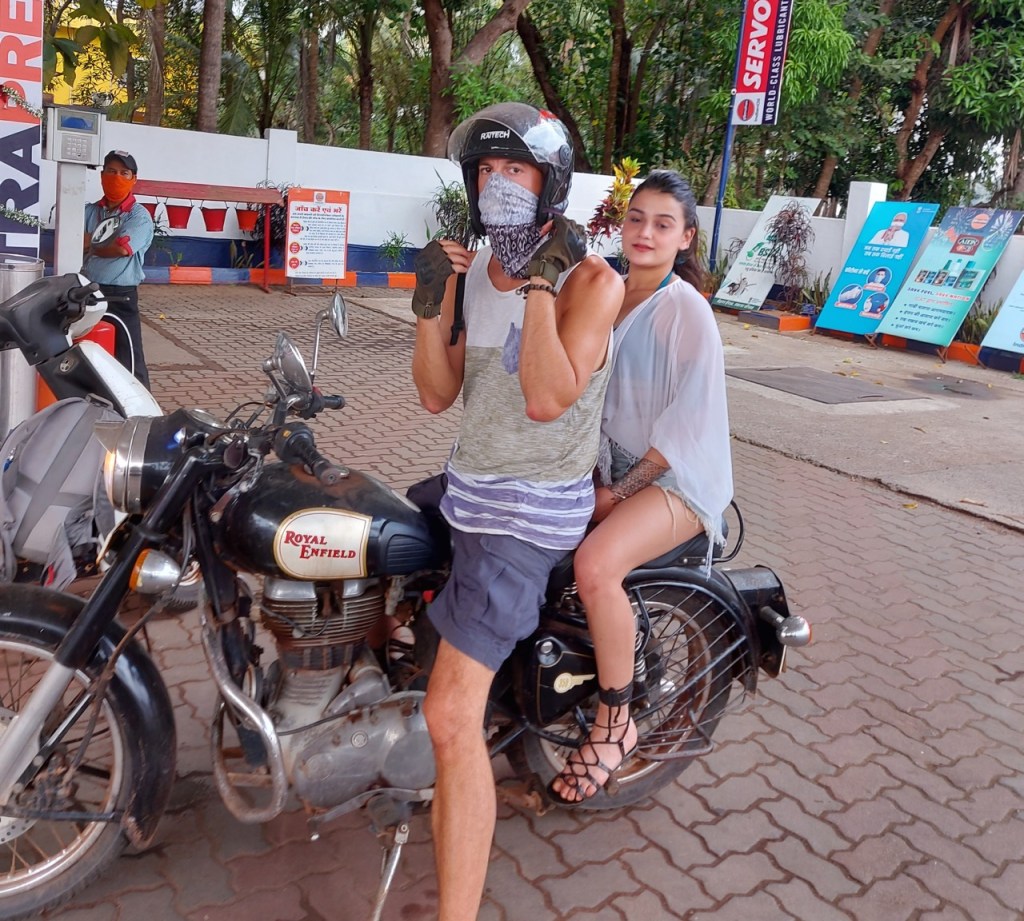
Since I’m writing about medical costs, I also got an X-ray when I was in Delhi recently. Back in the fall I crashed my rental Royal Enfield motorcycle when a cow came out of nowhere on a blind turn.
The road was sandy and I applied the brakes too hard, crashed and fell on my elbow (the cow was unhurt). I have had lingering elbow pain since, so thought I should finally get an x-ray. The finding was no fracture.
Total cost for X-ray in specialty clinic: 500 rupees … or just under $7 dollars. This is not the price after insurance. I didn’t use my insurance because it’s too much hassle. That’s the straight cash price I paid in Delhi for an X-ray at a private specialist clinic.
DELHI DENTIST COSTSFOR SIX FILLINGS
Okay maybe I have been smoking and drinking and not flossing much for the past 10 months while traveling. So I finally went to the dentist in Delhi to check the damage.
I went to what seems to be a fancy dentist office: Clove Dental in the gated community of Hauz Khaz. I saw an Indian dentist woman who replaced three old fillings that had come out and filled three new cavities.
(Clove Dental clinic)
The office was very clean and hygienic and they even let me play my own chillout electronic music. She did a great job, with modern equipment and little pain involved. Total bill was 7,200 rupees or $97 U.S. dollars. Not sure what the price in U.S. would be but I guess about 4 times that.
So the verdict is Indian medical costs are rock bottom and dental costs are very reasonable. And now I’m ready to keep traveling and have saved money on medical costs that I can spend on motorcycles and substances that may lead me to get injured again.
A beautiful girl approaches an older guy in a nightclub as techno beats in the background.
“Hey, you took my drink from the dance floor!” she says.
“No, it’s not yours, it’s mine,” he assures her.
“I’m tripping. Let’s leave here,” she says, grabbing his hand.
They ride his bike through the dusty back roads, returning to his hotel, holding hands awkwardly.
“Do you like curvy girls?” she asks.
“Yes. Some of them.”
They find more treasures, and trip even harder in his small clapboard room by the beach. Things get intense. She stares deeply into his eyes, noticing they’re beginning to change, frightening her.
“I’ve seen something in you; an old woman, or wolf,” she exclaims, as she begins shaking and crawls under the covers. “Are you going to hurt me?”
“No,” he replies.
He notices her shape shifting from fair into dark; beautiful yet scared. A totally different girl opens the covers and invites him underneath.
They confide in everything. He tells his darkest secrets that he’s never shared before. “I don’t care,” she says, staring into his ever-changing eyes. “I like you, man.”
She let’s slip under her breath, “I mean, I love you.”
He melts — asking her why.
“No one has ever loved me and cared for me before,” she says, tearing up. “Never treated me special, or asked how I’m feeling.”
It’s the most honest thing he’s heard, and in that moment he realizes he wants the same.
“I love you too.”
Night becomes morning, morning becomes night, and they’re still up, tripping.
He drops her at her friends’ to say goodbye. Her flight leaves in the morning and she’s upset this is ending so fast. Her face shifts again and again, like an actress cycling through the emotions.
He leaves saddened, and looks up for just once last glance as she watches from the balcony above. It would be their last moment together.
Things go dark.
The next morning he awakes to knocking on his hotel door. He opens it, expecting the housekeeping staff.
But it’s her only, standing there more beautiful than ever in a red dress. The same girl, but a person he’s never met.
While traveling through India for the past ten months I’ve met many young Indians who are also traveling, staying in hostels, and generally living a lifestyle that runs afoul of their parents’ wishes.
When the topic of marriage comes up, they often say something like, “My parents want me to come home and get married ASAP. What should I do?”
I respond, “Do whatever the fuck you want to do.”
But it’s not so easy in India because of the archaic tradition of arranged marriages and other socio-economic factors. According to a 2018 Oxford University study, 93 percent of the country’s 1.3 Billion still follow this tradition.
How does an arranged marriage happen anyway?
#1) In India, most young people live with their parents until they are married. Many stay their whole lives, never really leaving home.
#2) Pre-marital sex is taboo. Some young people date and find love that turns into marriage. But this only happens 3 percent of the time and is condescendingly referred to as a “love marriage.”
#3) The vast majority of young Indians allow their parents to arrange their marriages. For the poor and uneducated this is often a necessity, as the country has little path to independence or welfare services. But well-off Indians also have arranged marriages.
#4) Parents arrange marriages by conspiring with town elders and hired matchmakers to find suitable candidates. They share “Bio Data” sheets, which are like resumes showing: education, religion, family history, skin tone, and caste. Many parents share online profiles of their children on shaadi.com and play digital matchmaker.
#5) When parents want their children married (which is usually late teens in the villages, and mid-20’s in the cities) the children are granted some time alone to meet their matches. Sometimes the whole families meet as part of this process. The children often have some veto options.
#6) If things go well, the families start planning the wedding right away. They spend huge amounts of their savings (and sometimes take loans) for 1,000-plus-person weddings, decked out like a Bollywood movie. This is often to appear as if they’ve socially networked themselves into wealth.
#7) In many places the bride’s family is required to pay a dowry to the groom’s to make up for the fact that a woman is considered of less value. This sometimes happens in reverse in places with few eligible women. Dowrys are technically illegal, but still happen all the time.
#8) If the son (or even worse, daughter) grows past the age of 28 and is still not married, they are labeled “unmarried” and considered an embarrassment to the family.
#9) Once married, divorce is rarely an option. Only 1 percent of Indian marriages end in divorce, compared to 50 percent in developed countries.
#10) If the couple encounters major problems in their marriage, they often just live with them for the rest of their lives, rather than leaving the black mark of divorce on their family.
Travelers’ Takes: Why do young Indians still go along with this?
“One of the reasons is the controlling nature of Indian parents and their obsession with ‘family values.’ If you’re caught with intoxicants, you face the family’s wrath, but bringing someone home you actually like is worse. A love marriage, or marrying someone outside of your cast is the easiest way to tarnish a family’s reputation.” — Ashraf, Jodhpur
“Given how little government does for common citizens, having to separate from family money can seem scary. Independence is a risky business and arranged marriages seem like the easier way. Also patriarchy has women having no life apart from family, leading mothers to be over involved in their kids’ lives.”— Mitushi, Assam(***UPDATE*** – Read Mitushi’s full counter-analysis on her new blog!)
“Generally, if husband and wife encounter major problems during marriage, they live together a miserable life fearing that if they separate, the society with look down upon them and their kids. Some educated couples in metro cities are taking steps to come out of this situation, but that number is extremely low.” — Shaily, Delhi
“There are a lot of bribes still practiced. The girl’s family pays a huge amount to the groom’s side. It mostly happens in arranged marriages. It’s the dowry.” –Akshata, Hubli
“Despite this, our generation is catching up to the rest of the world pretty fast. I know of all kinds of married couples: open, swinging, gay, sometimes, and for convenience. Many of us get to do what we really want. The rest just follow blindly with arranged marriages, considering it to be an integral part of the culture.”– Ronnie, Manali
“Seems like many young Indians are leaving home to travel and live the digital nomad life. They’re having sex with the people they actually choose to be with, well beyond the watchful eyes of their parents. Hopefully they get credit cards, keep traveling and fall in love far, far away from the false warmth of the family nest, which can quickly turn into a cold ball and chain.” — The Editor, Renegades Logbook
A plane flies in from Mumbai Another leaves from Delhi, and a third from Bangalore All three crash into the Arabian Sea
The passengers are lost Floating somewhere around Goa Inhaling clouds of smoke and chemicals Suspended in time and space
They’re getting sucked deeper into the funnel now Further down through the ocean’s vortex It’s that dark grey spiral The sunken dancefloor of Larive
I can’t see their faces Whether it’s a man or woman, boy or girl I don’t care
I inhale the techno and get so high I float Into a bay of brown arms and breasts Each pair holds me tight, then passes me along to the next Without judgment
Now I’m drifting down a jungle river It’s winding past the hostels and cafes I’m breathing in that smoky, Goa roadside smell It’s been nearly six weeks now, floating
Finally I find my friends and they pull me ashore We get on our bikes
Like ghosts we tear through the night Past Pappi Chulo, past Area 51, past the cops (fuck them) All the way to Curlie’s on Anjuna Beach
There, a girl with a strawberry face approaches She takes my hand and leads me through the sea of people
“Tell me when it’s time to go,” she says “Tell me when it’s time to breathe “You’re the only one that knows “There’s a voice inside me.”
###
(* Cover photo and lyrics from last stanza:From P60 with Lisa Shaw – Magic)