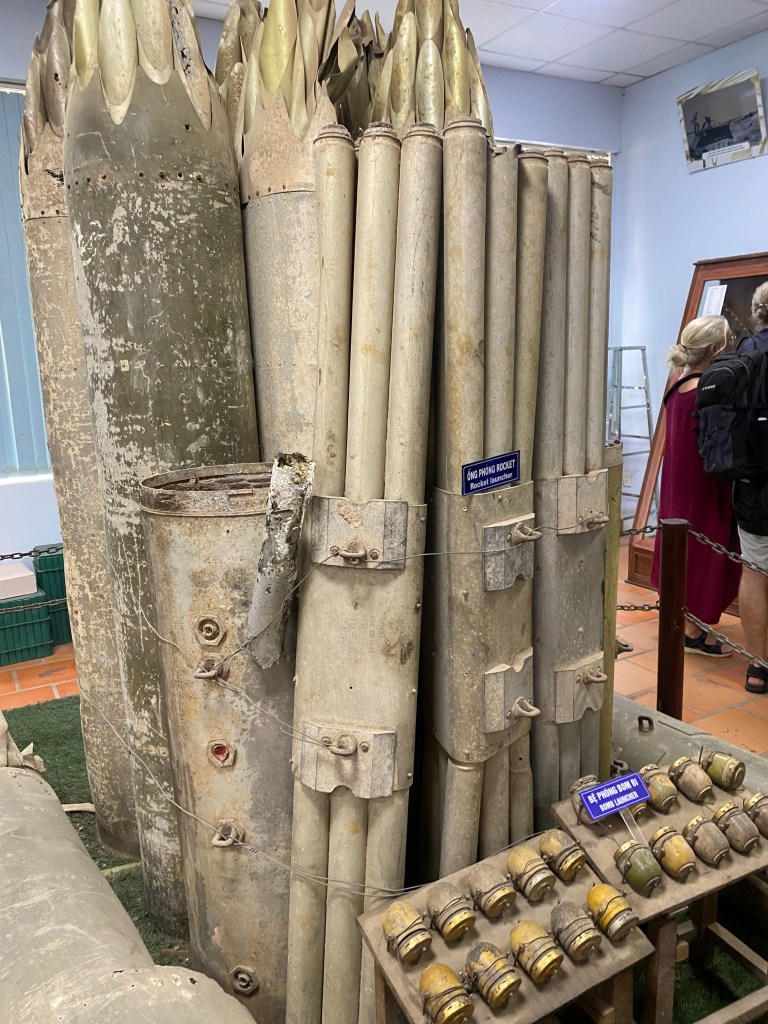
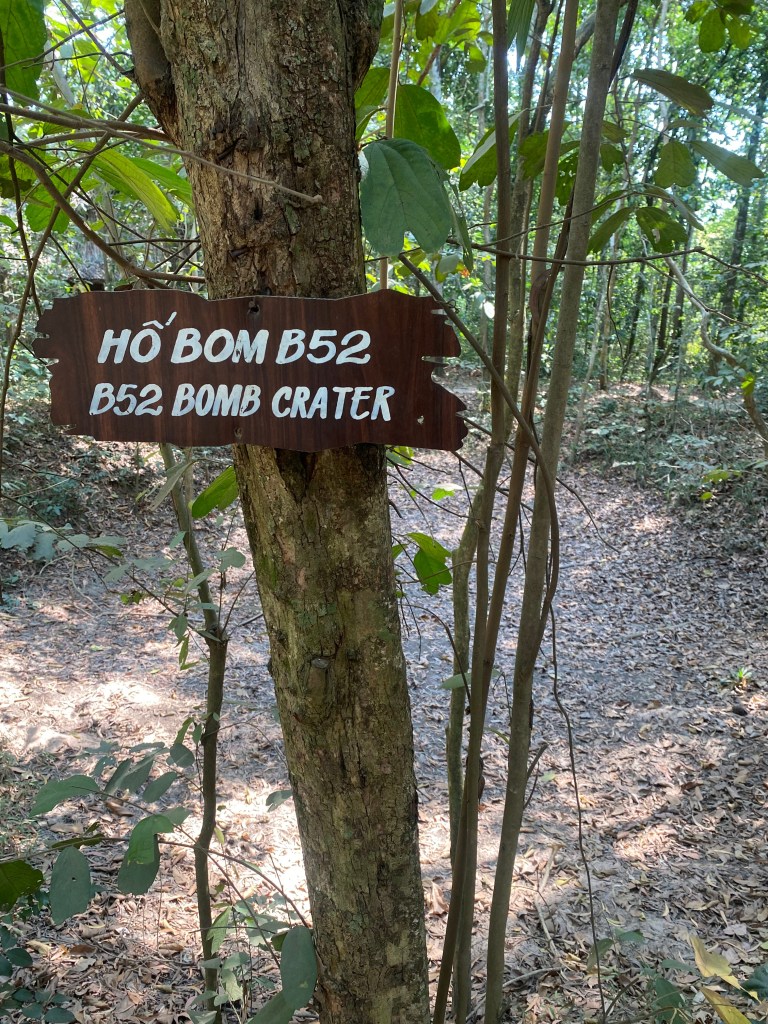
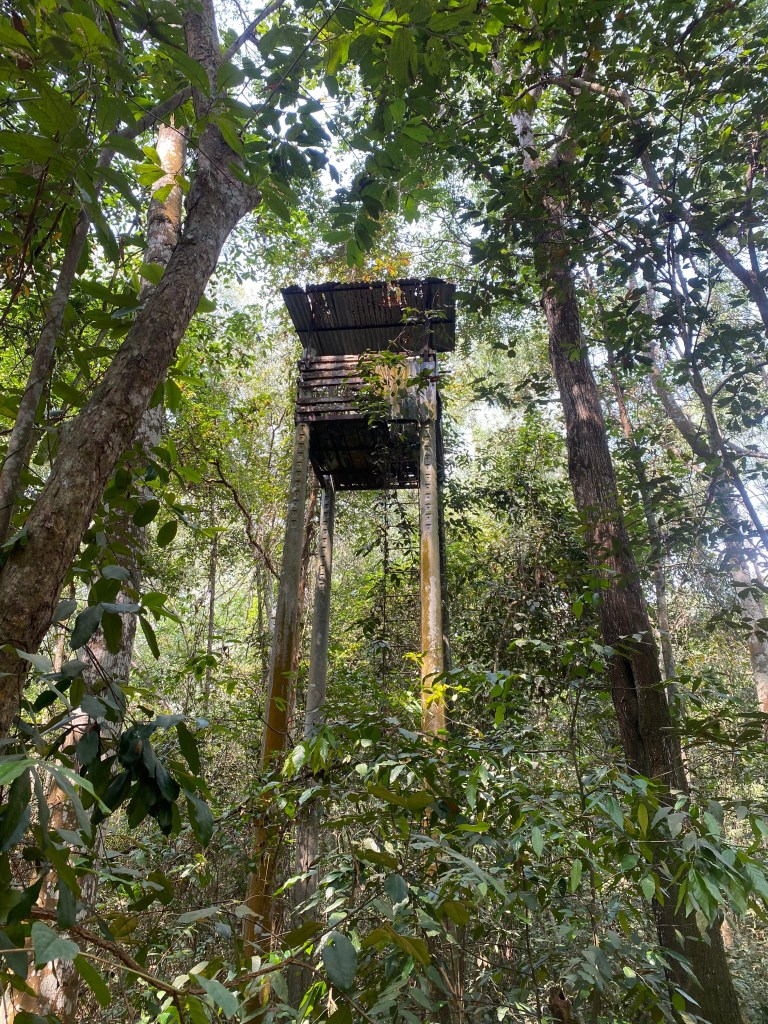
After travelling through Vietnam for the past month, circling the Mekong Delta by motorcycle, exploring the Chu Chi Tunnels, and visiting the War Remnants Museum and Museum of Fine Arts in Ho Chi Minh City (formerly Saigon), I felt the need to write something about the war.
But what can be said about war that hasn’t already been said by Ozzy Osbourne in ‘War Pigs’ (written by Black Sabbath’s Geezer Butler)? Thus, I turn it over to the Prince of Darkness Himself to narrate this multimedia slideshow I compiled from my trip.
Just pop in the earbuds, press play on this YouTube video, skip to the one-minute mark… and then scroll on down.
Generals gathered in their masses Just like witches at black masses
Evil minds that plot destruction Sorcerers of death’s construction
In the fields, the bodies burning As the war machine keeps turning
Death and hatred to mankind Poisining their brainwashed minds Oh Lord, yeah!
Politicians hide themselves away They only started the war Why should they go out to fight? They leave that to the poor
Time will tell on their power minds Making war just for fun Treating people just like pawns in chess Wait ’til judgement day comes, yeah!
Now in darkness world stops turning Ashes where the bodies burning No more war pigs have the power Hand of God has struck the hour
Day of judgement, God is calling On their knees the war pigs crawling Begging mercy for their sins Satan, laughing, spreads his wings… Oh Lord, yeah!
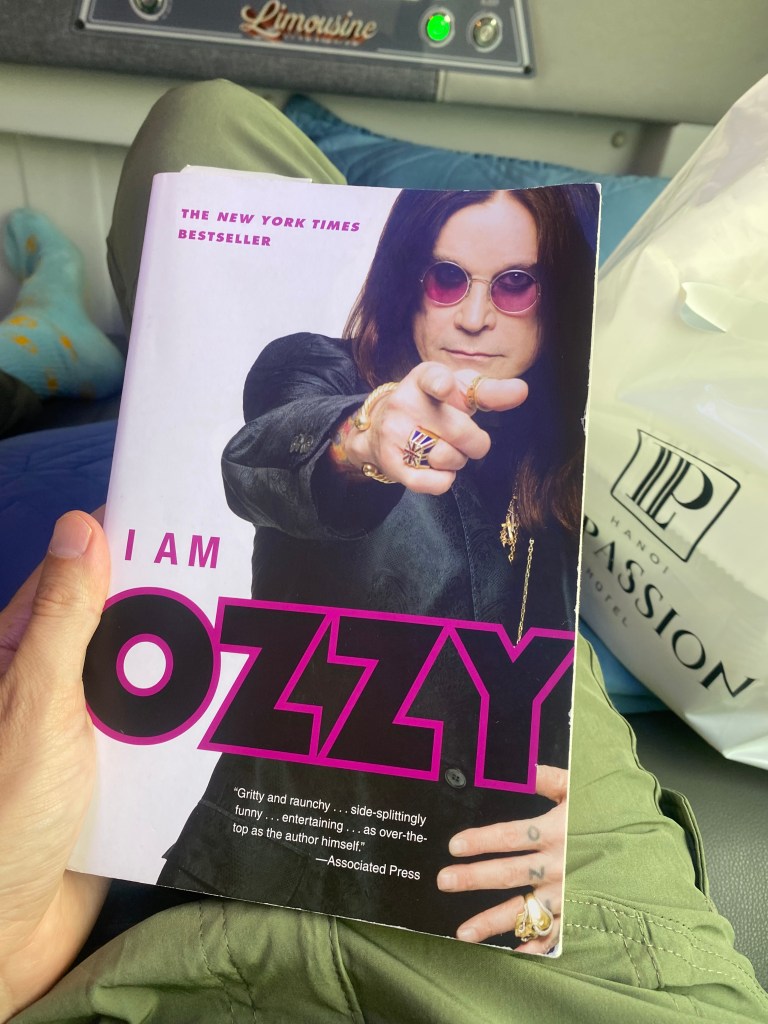
(This blog is dedicated to the amazingly kind people of Vietnam … and Ozzy, may he R.I.P. …p.s. I highly recommend reading his autobiography ‘I am Ozzy’.)
Renegades Logbook is back for our Special Honeymoon Edition!
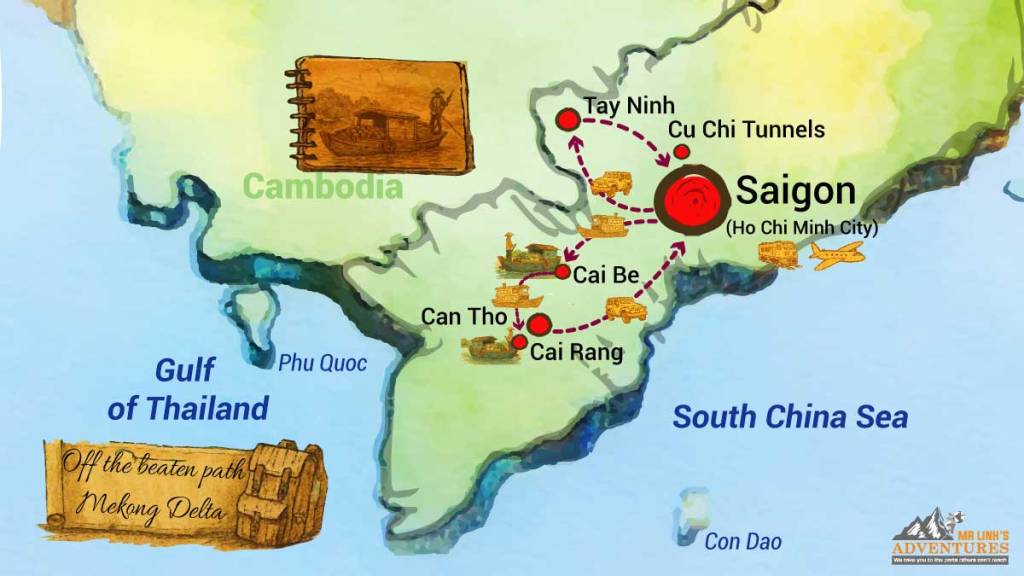
We’re reporting live and direct from Vietnam, where we just completed the first half of the Mekong Delta Motorcycle Loop — starting from Ho Chi Minh City (formerly Saigon in the east) and arriving at Phú Quôc Island (off the coast of Cambodia in the west) — following four days of adventure riding.
Okay, it’s our honeymoon, so first we did a little (a lot) of partying in the GoGo bars. I know you want to see some ninja shots from the GoGo bars …. and you know I’m gunna give it to you. This is Renegades Logbook, damnit!
(Getting a professional opinion on her new tattoo)(Waking up in a Saigon hotel room after returning from the GoGo bars at 8 a.m.)
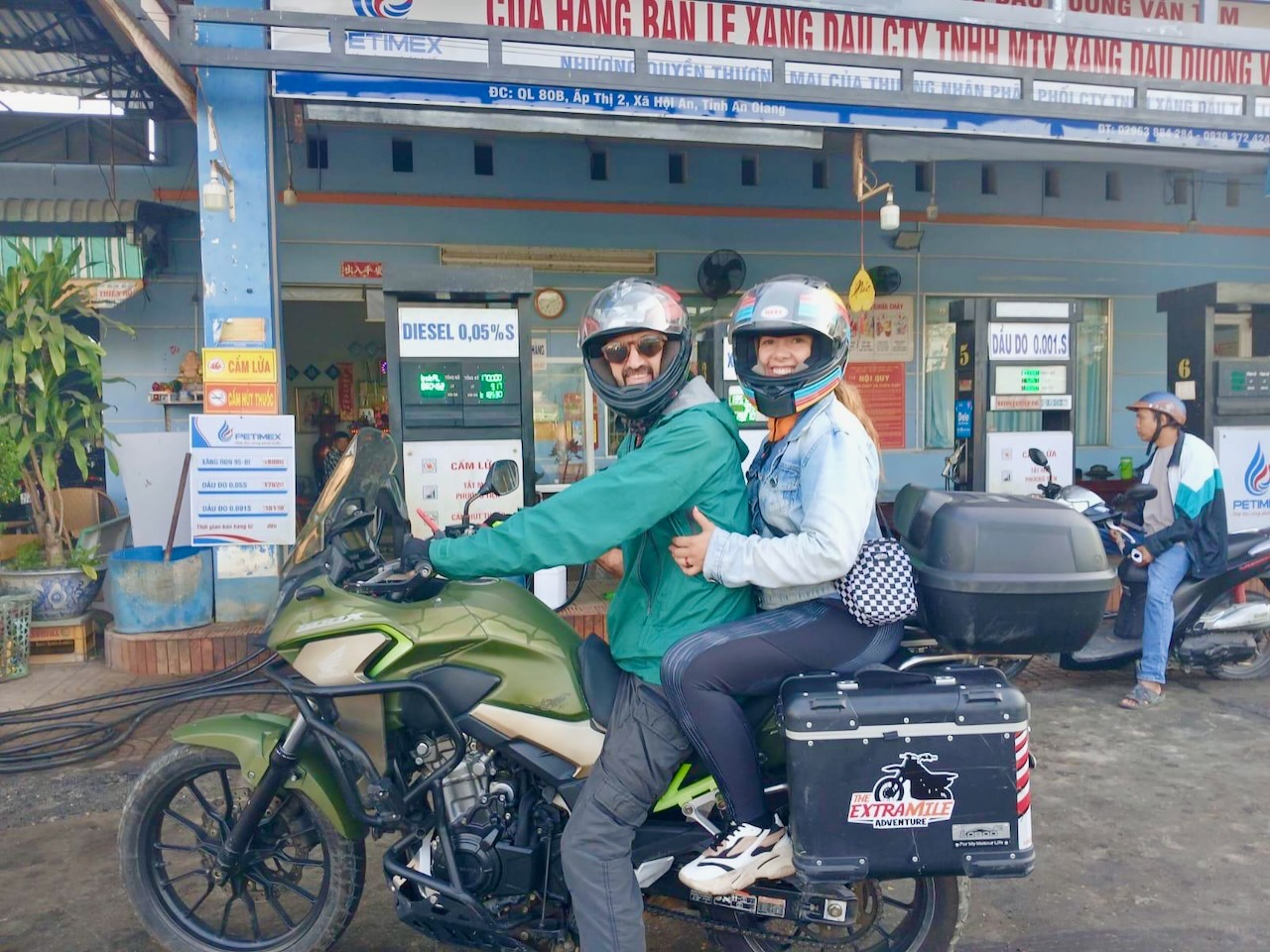
Next we spent several days searching for a moto big enough to haul an American guy, a Brazilian girl, and our luggage — which was nearly impossible because everyone in Vietnam rides scooters the size of toaster ovens.
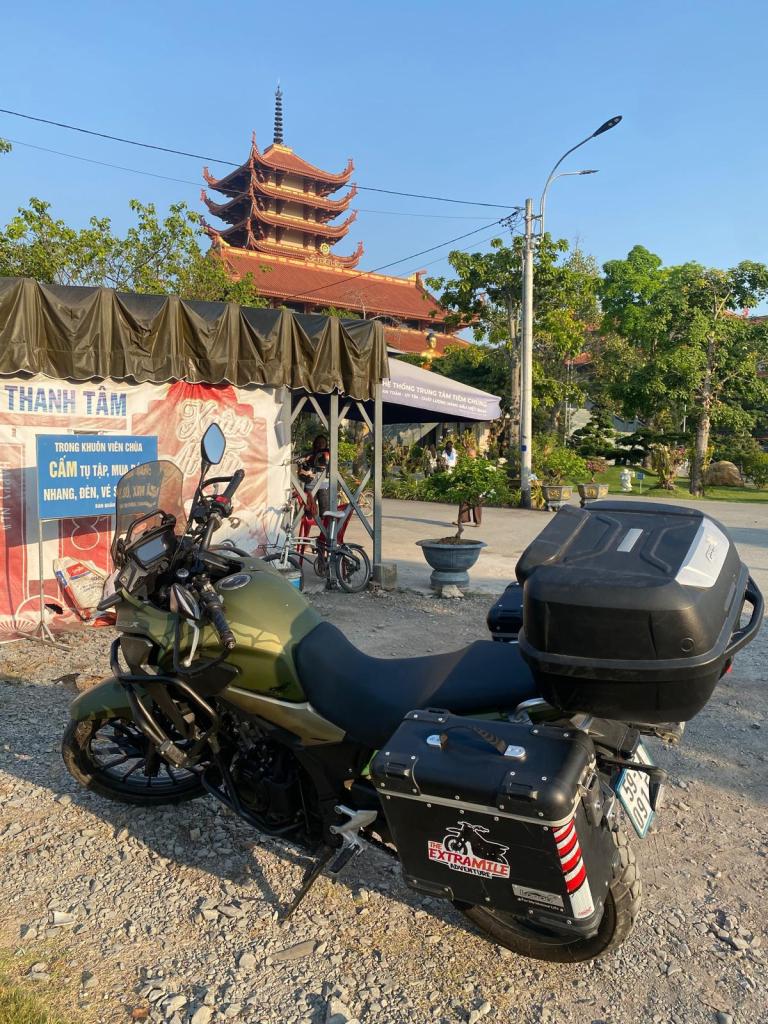
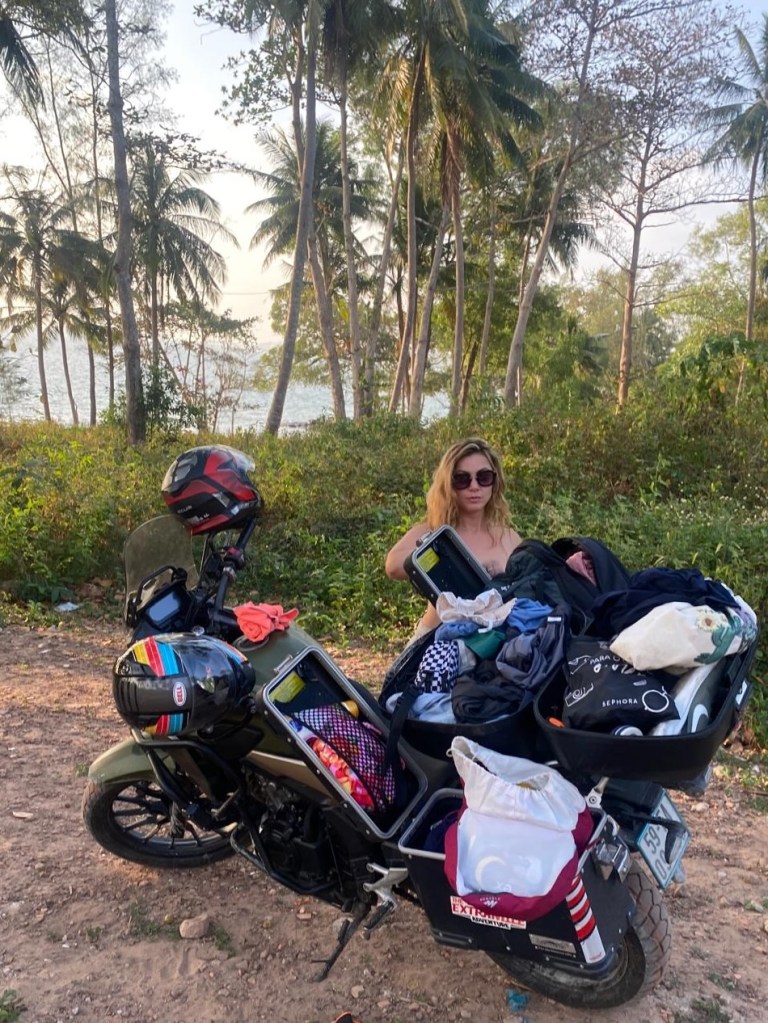
Fortunately, we scored a Honda CB500x with luggage panniers from The Extra Mile, a moto adventure shop in Ho Chi Minh City run by a high-energy Peruvian guy named Renzo, and his charming Vietnamese wife.
(We traded our honeymoon suite for this…)
There’s a lot to explain about this moto loop, but sources tell me the average attention span has now dropped to eight (!) seconds … so rather than bla-bla-bla, I will just drop some of the media highlights.
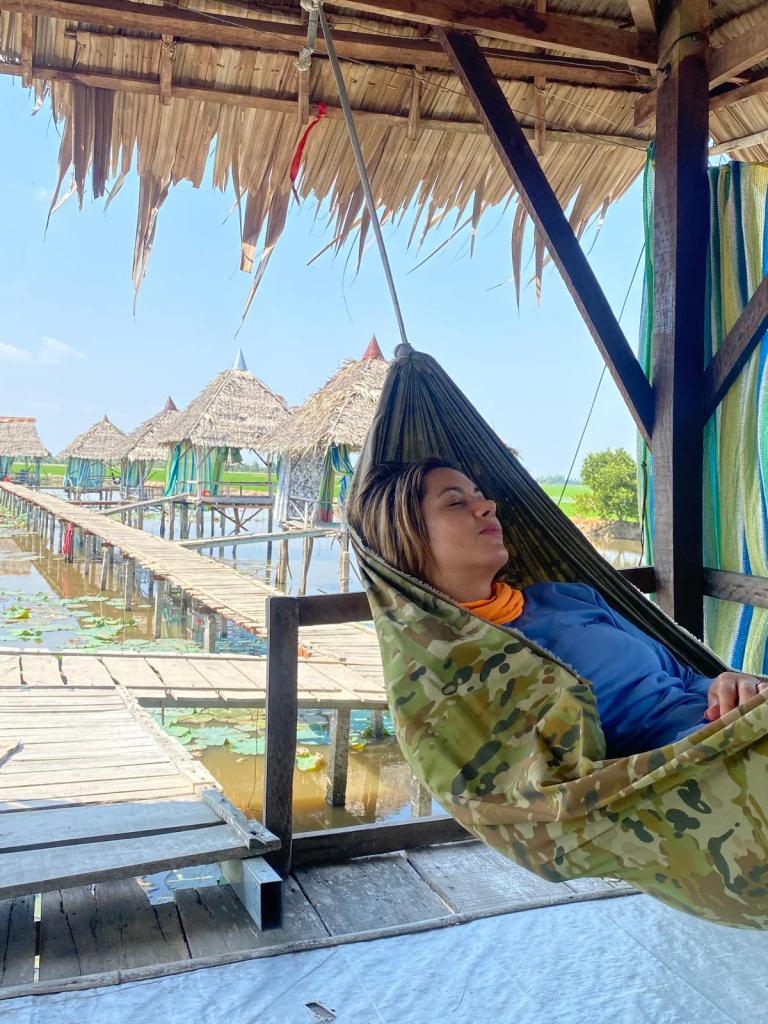
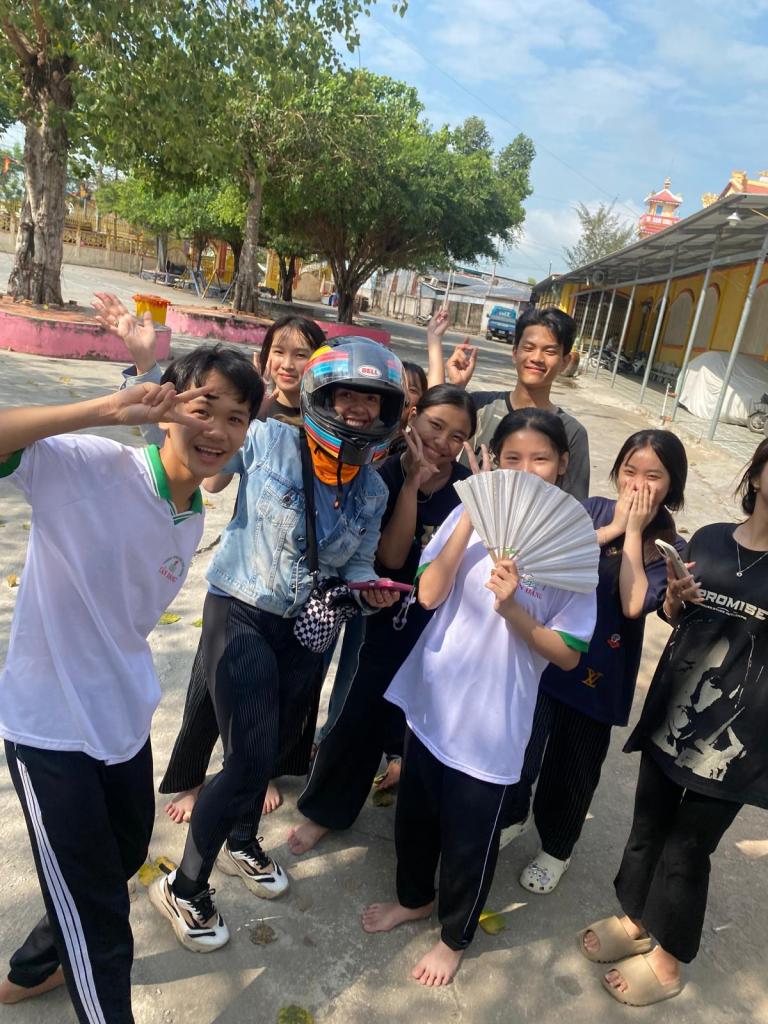
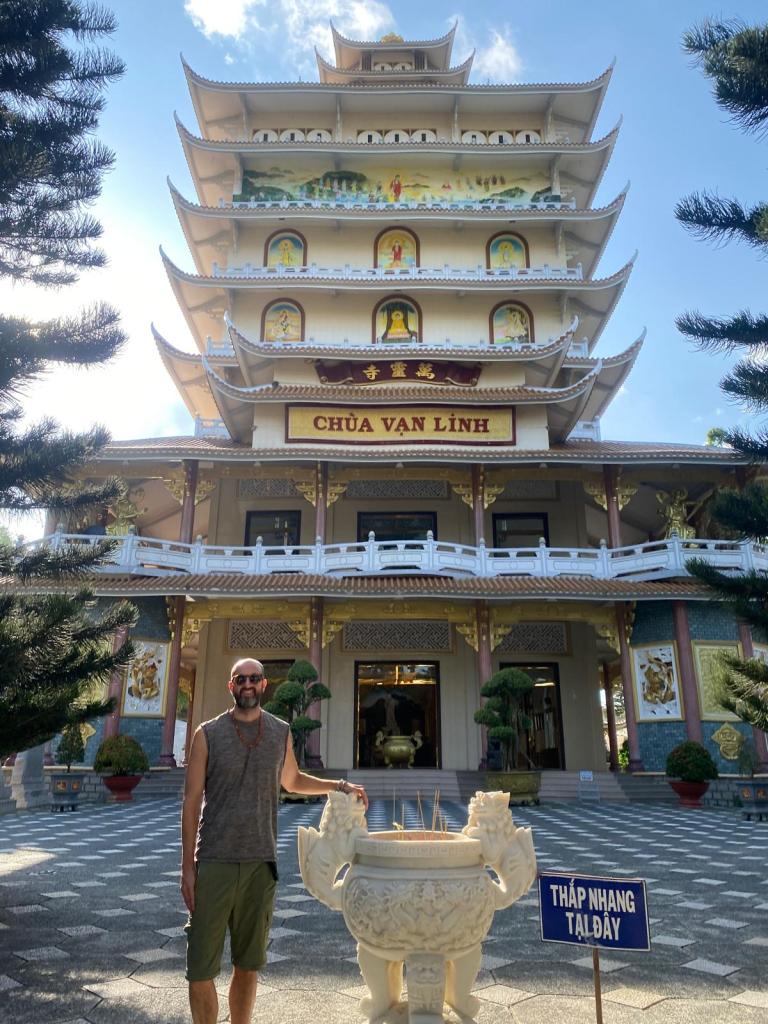
(The Lonely Buddha of Thanh Tam Pagoda, first stop out of Ho Chi Minh City)(Relaxing at Sen Hong Dong Thap Muoi restaurant along the Mekong Delta. Try the snakehead fish.)(Randomly stopped at this school and the kids came out screaming like Prince William just arrived, or something)
(Entering the ferry to cross the Mekong River)
In case you’re considering your own moto trip here in Vietnam, I should say something about the riding conditions. It’s not really riding but more like weaving through a tapestry of scooters, carts, and trucks coming at you. You are the needle and you need to thread yourself into the colorful tapestry of traffic, and make micro-adjustments to flow on thru.
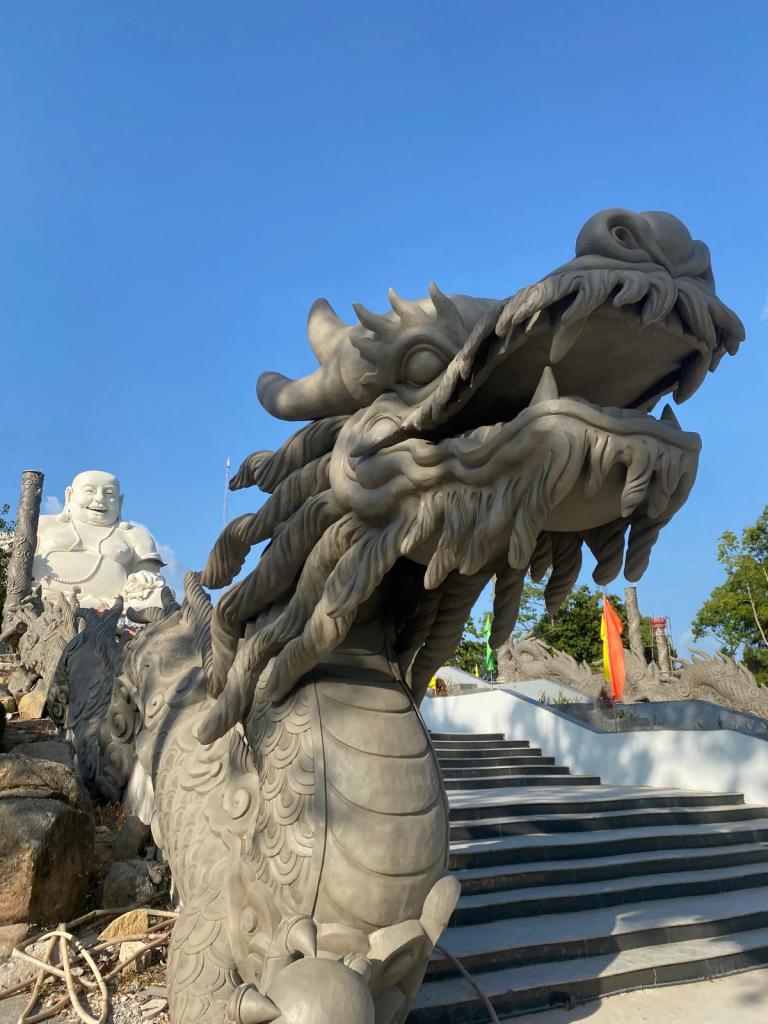
(We took a gondola ride to reach the Temple of the Laughing Buddha near the town of My Tho)(What’s more shiny, the temple, or my head?)
When you reach the ferry to Phú Quôc make sure to have breakfast first, because it’s a 3.5 hour ride through the Gulf of Thailand to reach the island, and you can’t even buy a pack of crackers on the boat.
(Made it to the island! Time for Brazilian girl to shed her moto gear for the G string)
Greetings from Phú Quôc Island in the Gulf of Thailand!
I stole this map from another page because the actual map we were provided for our Mekong Delta Loop is insanely complicated, and this one looks more like a Renegade treasure map! Also, it’s roughly represetative of the adventure we’ve been on.
Stay tuned for Episode 2… Return to Saigon!
Now excuse us while we go drink some $1 beers on the beach…
Spiritualized western women obsessing about ‘Mercury in retrograde’; gringos rocking insane floral shirts; friendly locals suddenly requesting large sums of money on a suspicious sob story.
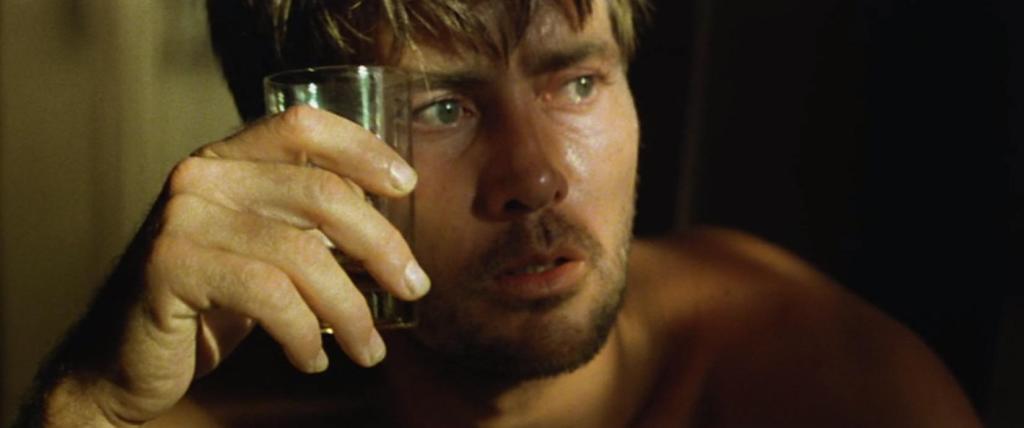
Oh, and that guy who’s now sober because he penetrated too deep into the red-lit chasm of the abyss.
These are the characters you inevitably meet traveling Southeast Asia.
And it’s why you get that feeling you somehow know the characters of White Lotus Season 3 — even though they’re probably richer than you — and rock more expensively insane floral shirts.
Created, written and directed by Mike White, The White Lotus is a dark comedy anthology appearing on HBO (aka Max). Season 1 starts at the eponymously-named resort in Hawaii, before moving to Sicily for Season 2, and touching down in Thailand for Season 3. Most of the characters are new, though they’re are a few recurring characters linked to a mysterious murder.
(Before we continue, let’s thank HBO for providing viewers with an oasis of quality content amidst the sea of streaming sludge that’s out there.)
Okay, on with the review of The White Lotus Season 3, from the lens of a travel blogger. ALERT TO MINOR SPOILERS AHEAD:
First, the scene and setting of The White Lotus are sublime; taking us from the lush resort, past the islands of Koh Samui, and into a Buddhist mediation center. Season 3 focuses on the spiritual side of travel, which has become popularized by people seeking to disconnect from the spiritually bankrupt technocracy of the West.
One of my favorite early parts is when the receptionist asks her guests (the uber-waspy Ratliff family of five) to surrender their cell phones upon entering the resort. “We consider the hotel to be a digital detox area,” she says. “You can just focus on being present, and each other, and self care.”
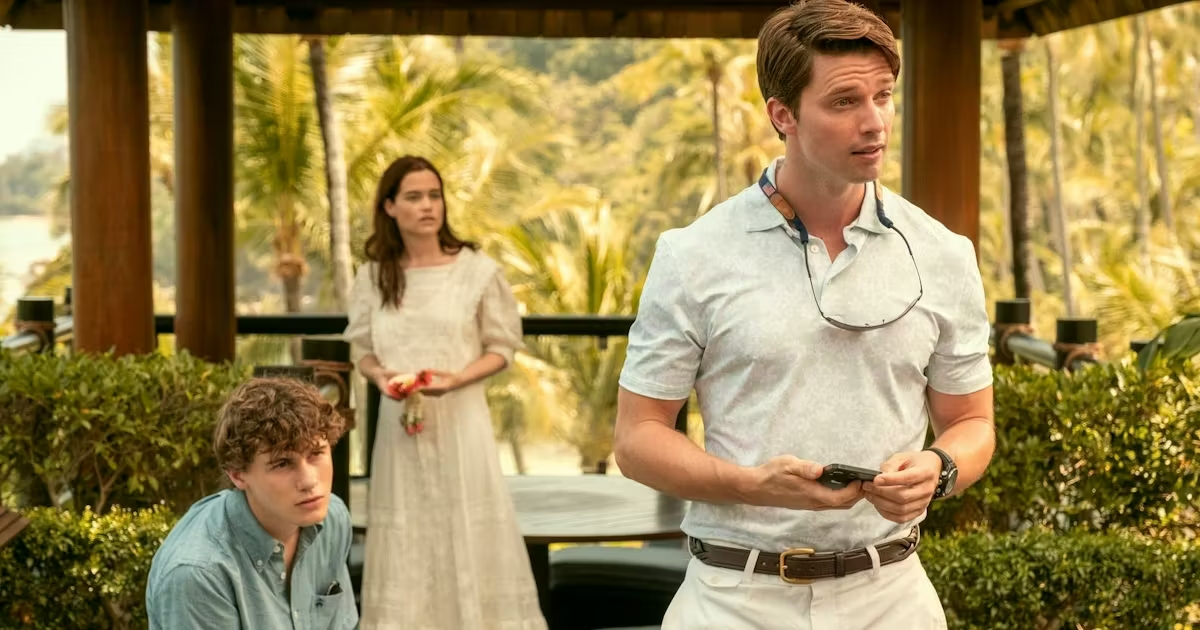
The totally normal Ratliff siblings arrive at the White Lotus, Photo: HBO
Eternal fratboy Saxon Ratliff (played perfectly by Patrick Schwarzenegger) responds, “What am I supposed to do here all week without my phone, eat a bunch of fruit?”
After much debate, the Ratliffs do give up their phones, actually giving the viewers some sense of digital detox, and preventing us from some Euphoria-esque hell where we have to watch young people texting all series. Thank you receptionist lady!
As someone who has traveled extensively through Southeast Asia and South America without a phone (my record is one year), I appreciate White Lotus for even raising the specter of phone-less travel and pray to Lord Shiva it will spread.
Probably not, but here’s hoping.
Chelsea (played by Aimee Lou Wood), Photo: HBO
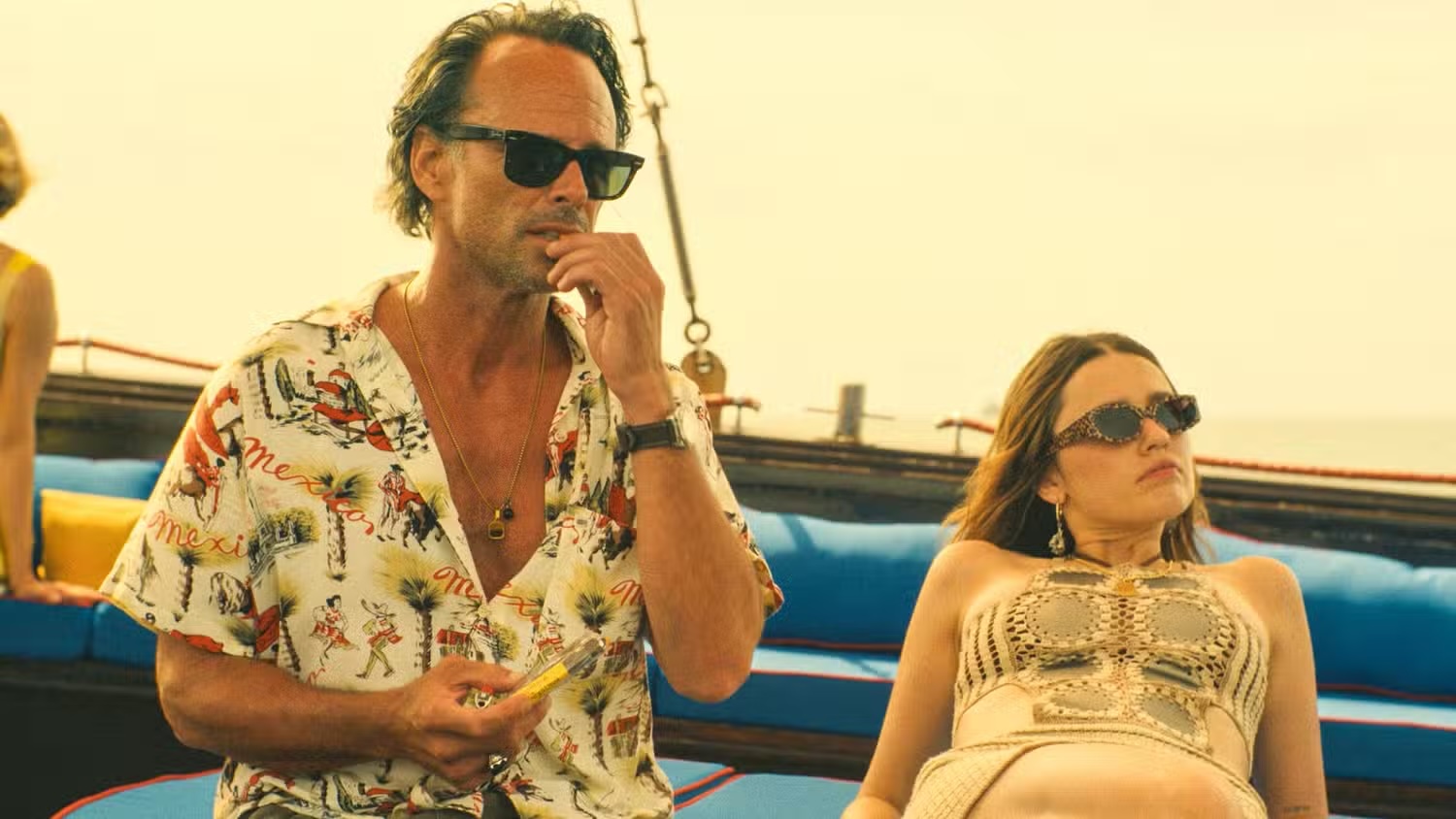
One character who probably should have given up her phone is Chelsea, the spiritually mismatched girlfriend of nihilist Rick Hatchett (played by national treasure Walton Goggins). Later in the season, Rick leaves the White Lotus resort to attend to some shady business in Bangkok and Chelsea is left perpetually lost in his voice mail.
“It’s like we’re in this yin-and-yang battle,” Chelsea tells Saxon at a party, “and I’m hope, and Rick is pain, and eventually one of us will win.”
Chelsea is that spiritualized, yet materialistic European girl we all know from traveling. Rick is the negative energy American guy, who at one point releases a bunch of snakes from captivity in a Thai market. (Crazy coincidence: I know of an actual American traveler who released a bunch of rare birds from a Bali temple and was summarily deported.)
Collectively, Chelsea and Rick were my favorite characters — that was until Rick walks into the lobby of a Bangkok hotel.
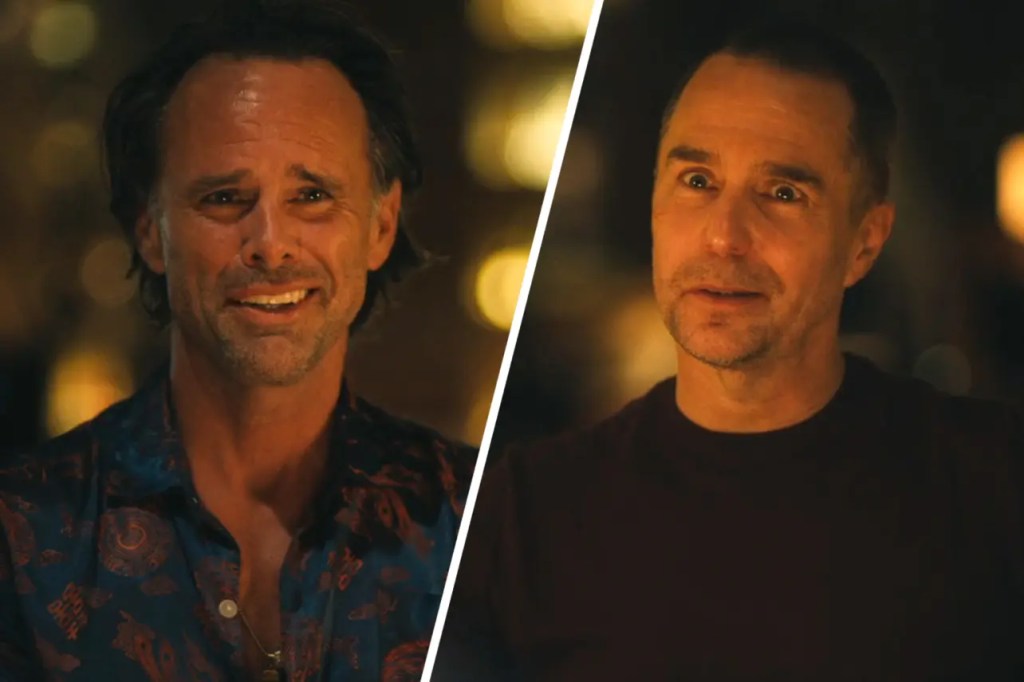
Midway through the season Rick reunites with his old travel buddy Frank (Sam Rockwell), who delivers a four-minute monologue that is one of the most jaw-disjointing stories ever relayed on TV.
“Bro.” Rick and Frank catch up on Bangkok
Frank is the lone-wolf renegade American who stayed in the clubs of Bangkok a little too long it seems, and is now on the sober train. (p.s. if you haven’t been to Bangkok, whatever you think it is … it’s exactly that.)
The only thing better than Frank’s monologue is when Frank falls off the wagon and lands right back in the Go-go bar with Rick, leading to a scene that puts The Hangover to shame.
As anyone who has attempted sober traveling will know, there’s nothing more likely to break your sobriety than reuniting with that old travel buddy who knows how to go fullpower, 24-hour, no toilet, no shower.
In case anyone reading hasn’t watched, I won’t reveal any more plot details. But hopefully you will watch and itch that travel bug, and meet up with that old travel buddy, and break your sobriety, for just one night at least.
“It’s Bangkok, let’s paint the town red,” says Frank. “I’ll go back to the monastery tomorrow.”
Speaking of monasteries, the whole reason the Ratliff family is in Thailand is so daughter Piper (Sarah Catherine Hook) can meet a famous Buddhist monk.
In a monologue of his own, the monk drops some Buddhist gems, explaining its teachings on pleasure, pain, consciousness and ultimately death and reincarnation in front of Piper’s tortured father Tim.
When traveling Southeast Asia you can, and should, seek out such wisdom. The fact that it’s shared on TV — even in some basic way — is a gift to viewers eclipsing all the natural beauty of the resort, and even those floral shirts.
So… for the first ever Renegades Logbook review of a TV series, I give The White Lotus Season 3 a full FIVE STARS — befitting of this epic resort.
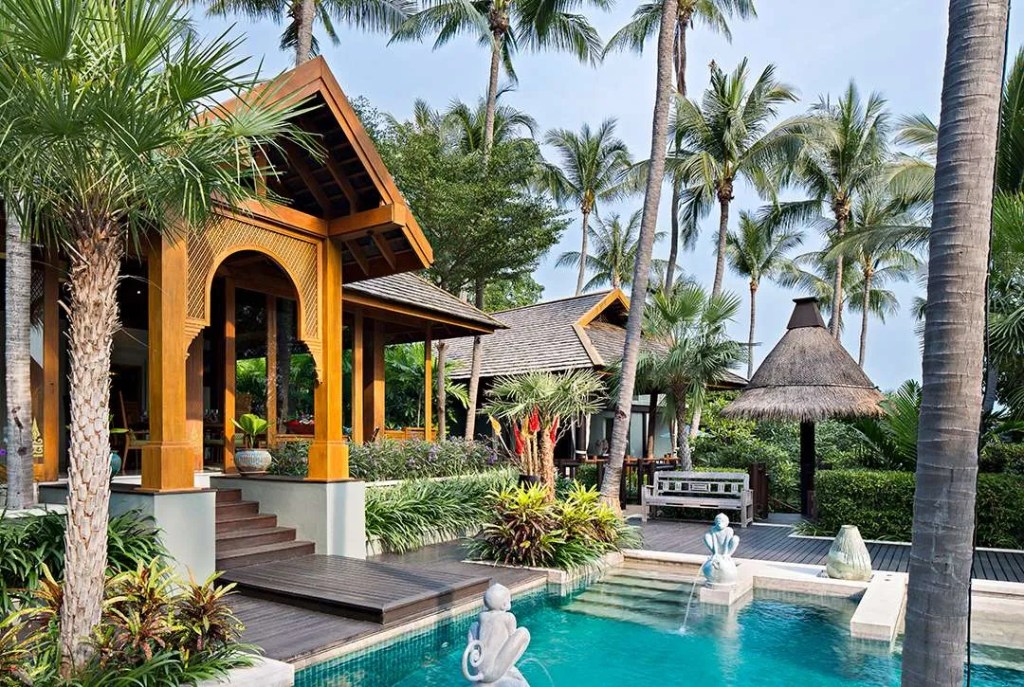
Photo: The Four Seasons Koh Samui, setting of The White Lotus Season 3
R.I.P. to our brother Ronnie Mukherjee who passed on last year. Ronnie was a legendary motorcycle road captain, owner of the ‘Basecamp Nirvana’ hostel in Manali, India and tour-guide of the mountainous Himachal Pradesh and Jammu and Kashmir regions.
Ronnie was also owner and best friend to Loki, the Himalayan Mountain Dog he adopted as a puppy, and whom notoriously rode on the handlebars of his Royal Enfield Machismo 500cc. Ronnie had no children, but Loki fathered many, much to the chagrin of the Manali villagers.
Originally from Delhi, Ronnie was a legendary biker who once broke his back in a crash and kept on riding. He suffered from chronic back pain but rarely complained. Following the COVID-19 lockdown in Manali, Ronnie put up many stranded international travelers in his hostel for free, always quick to offer a joint and some travel advice, followed by a plate of Chicken Biryani with his classic rock blaring.
Ronnie taught me how to ride a Royal Enfield on the steep, cracked-up roads of Manali, chuckling when I crashed in front of a bunch of construction workers. ‘You ride, you fall, you dust yourself off,’ he said.
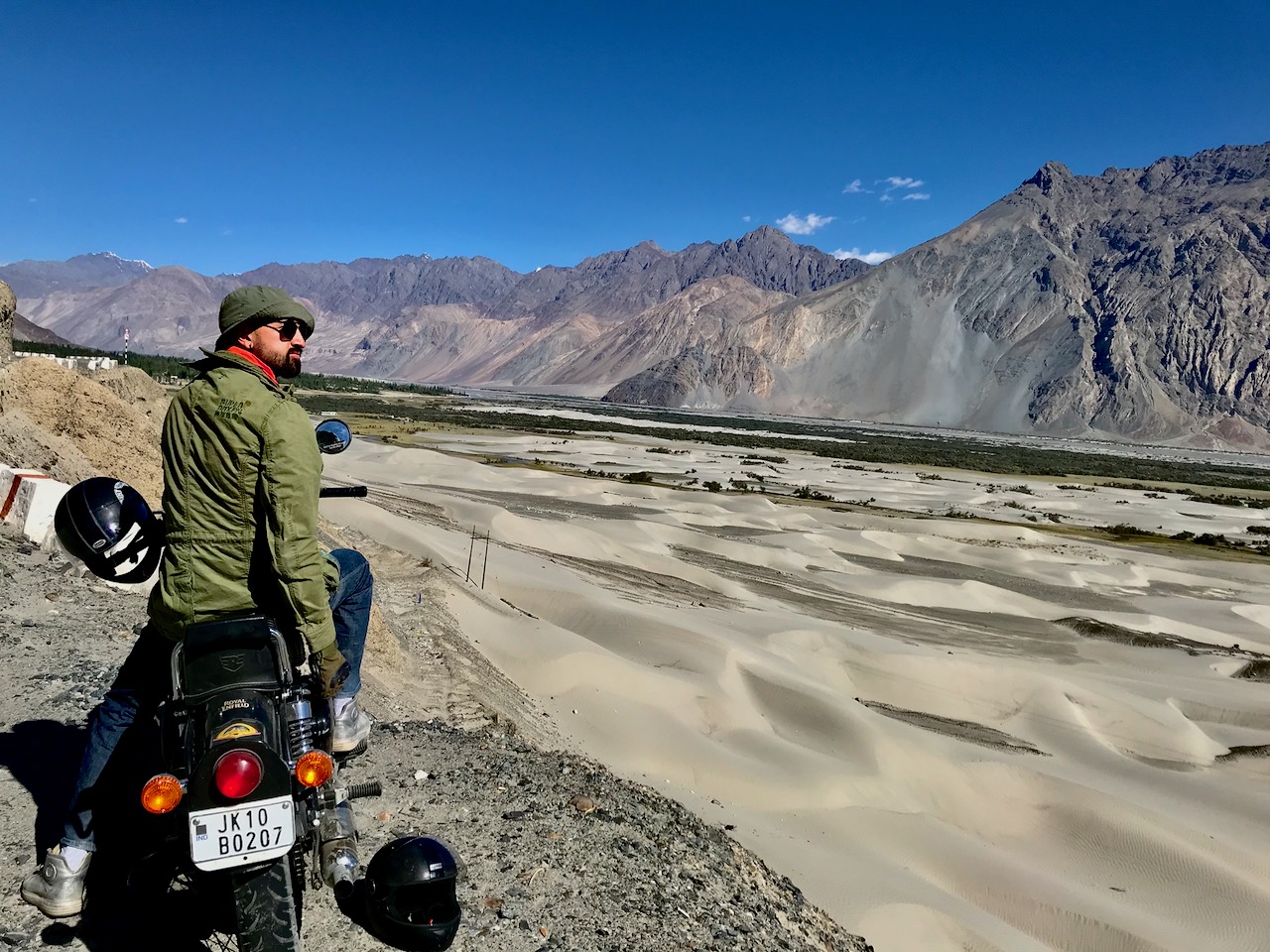
I will forever be in Ronnie’s debt, because he refused to allow me leave India without first arranging a motorcycle club trip through the Zanskar and Nubra regions of Ladakh, which was among the greatest and most intense experiences of my life. We share a tattoo of the retro Royal Enfield logo, which he got first and I later copied after a bad moto crash.
Thank you Ronnie, one of the original, founding members of the Manali Renegades crew, along with Chris, Danny, Sonam, Alex, Eva, Lauren, Ashish and of course, Loki. Many of Ronnie’s adventures and photos remain chronicled on his Instagram: @TwoWheelsofNirvana.
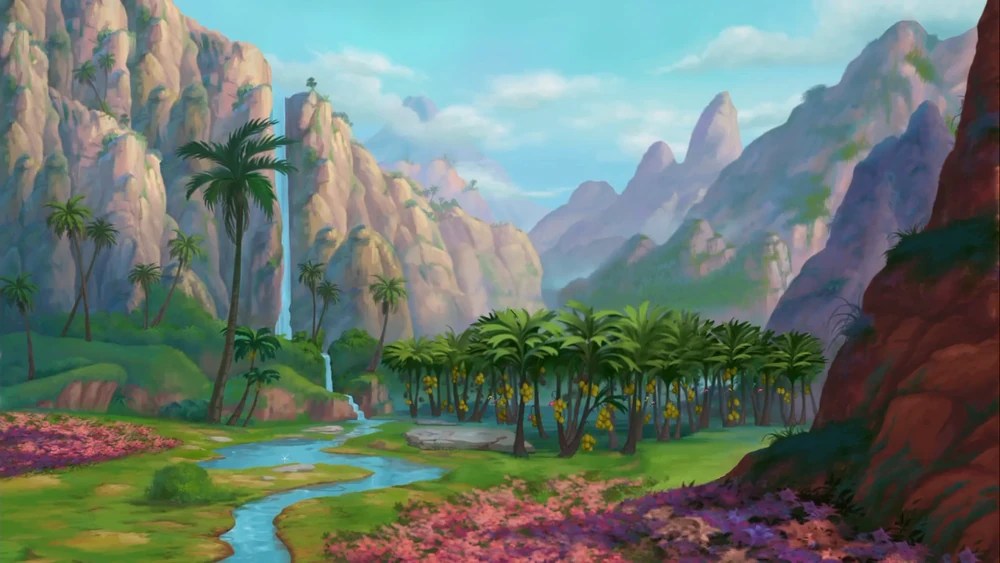
Remember the 1980’s animated adventure ‘The Land Before Time’ — featuring cute dinosaurs frolicking around a pre-historic paradise? That’s what Iguazu Falls is like.
Valecxpedition arrived to tour of this 7th Wonder of the Natural World and found ourselves transported more than 100 million years into the past, when lizards roamed free.
DAY 1— Jungle Trekto Falls
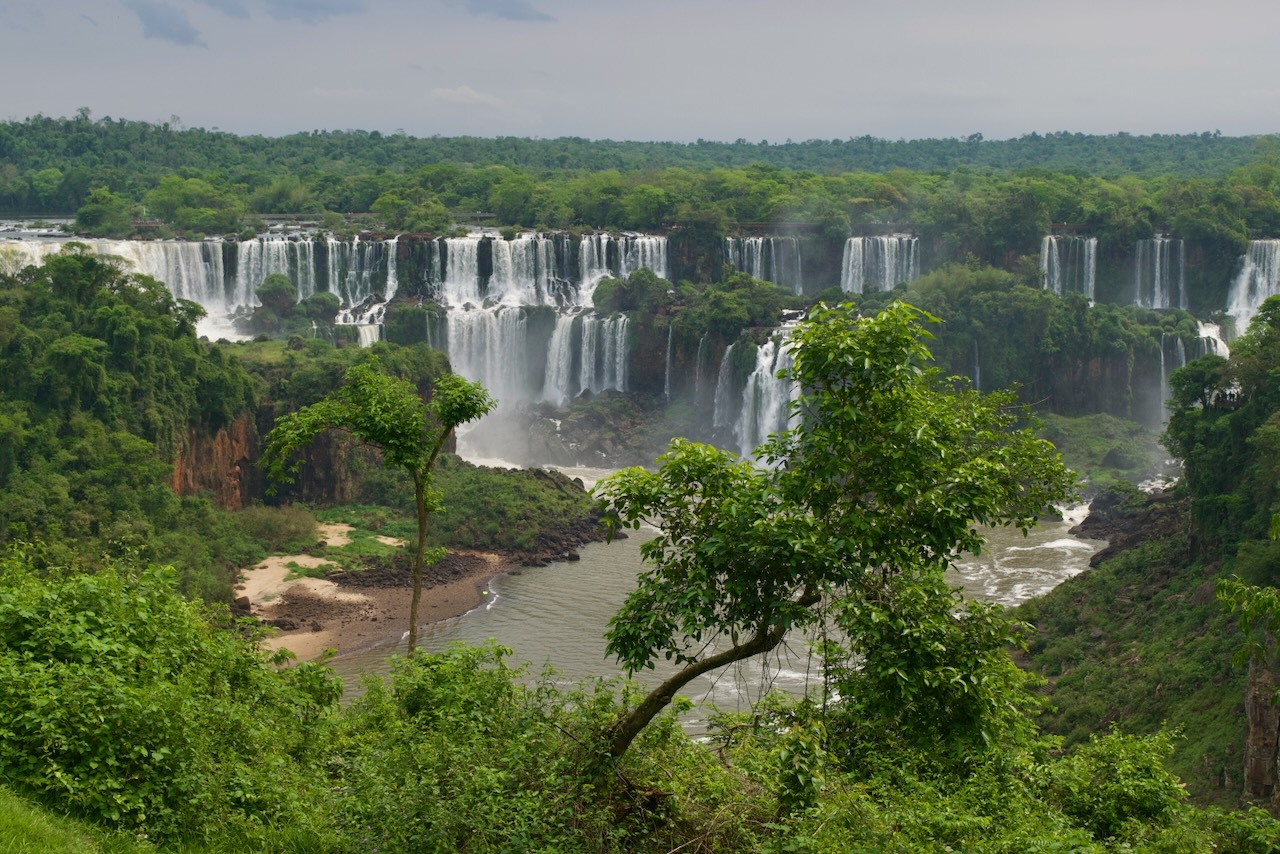
As we trek down the path towards the pre-historic caverns, water cascades in endless directions from glistening pools, encircled by palm trees. The cataratas crash down into giant pyramid boulders, jettisoning mist into the air. It forms a dreamland of lush green jungle spanning some mammoth, tectonic chasm.
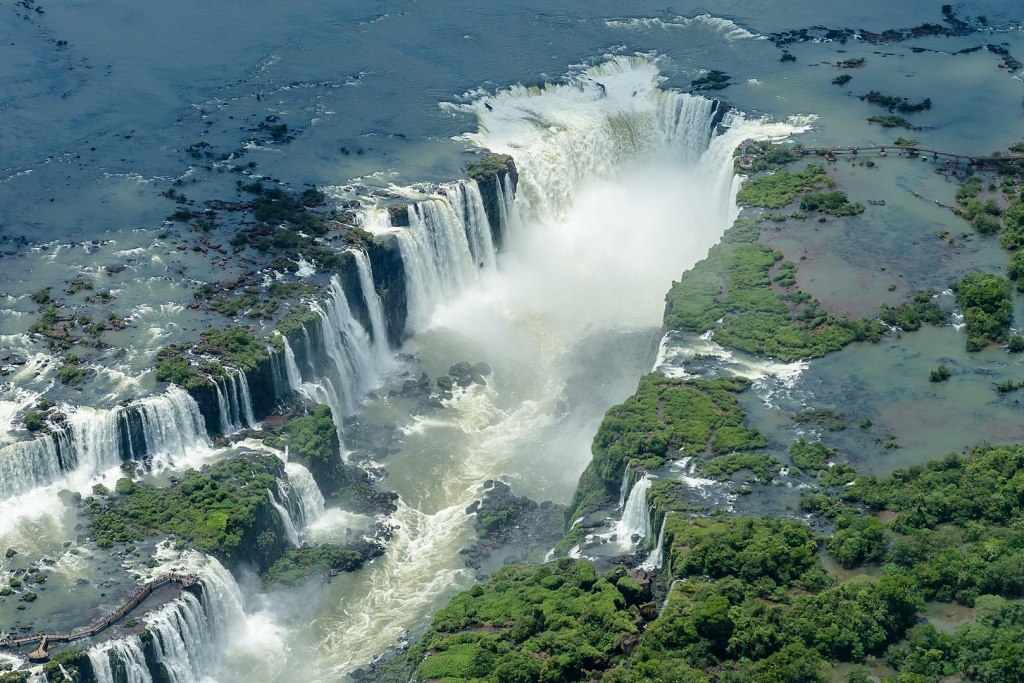
The Iguaçu River Falls are located on igneous rocks representing the largest basaltic volcanic lava flow that occurred on Earth, between 120 and 130 million years ago, during the Cretaceous period.
This is witnessing the opening of an early world vortex. The matron mouth feeds and flows into the Brazilian Atlantic Forest, spawning infinite leaves and vines, twisting up through a barely-broken canopy.
(Aerial photo curtesy of Wikipedia; the others shot on my Nikon D3300)
Below the underbrush, glowing mushrooms form a web of interconnected neurons, passing knowledge and minerals. Jaguars stalk the forest at night, as the moon creeps above the palm-dotted ridge line, illuminating the misty pools below.
DAY 2— Macuco Safari Boat
In the morning, we take an orange, rubber powerboat with dual 200 hp outboards up the river towards the Cataratas do Iguaću. The ‘Macuco Safari Boat’ easily planes over Class 4 rapids and spiraling eddies, as we watch the brown cliffs pass overhead.
A swarm of borboletas sparkle the riverbank with yellow, unharnessed energy.
Now we’re approaching the crashing falls, plummeting from up to 80 meters overhead into the Iguaçu River, as our boat drifts ever closer.
The passengers shriek as we’re engulfed by the world’s largest waterfall system, disappearing into a misty, mountainous abyss.
(Macuco Safari Boat promo photo)
(Images from Universal Pictures ‘The Land Before Time’ 1988)
In September of 2021 I hired two guides to take me through the ‘Igapó’ backwaters of the Amazon on a canoe camping trip, roughly 100 km south of Manaus in Brazil. I wrote a journal — which I thought was lost forever — but recently turned up in my dad’s basement. Here’s some excepts from my trip:
Day 1— Canoeing to Jungle Campsite
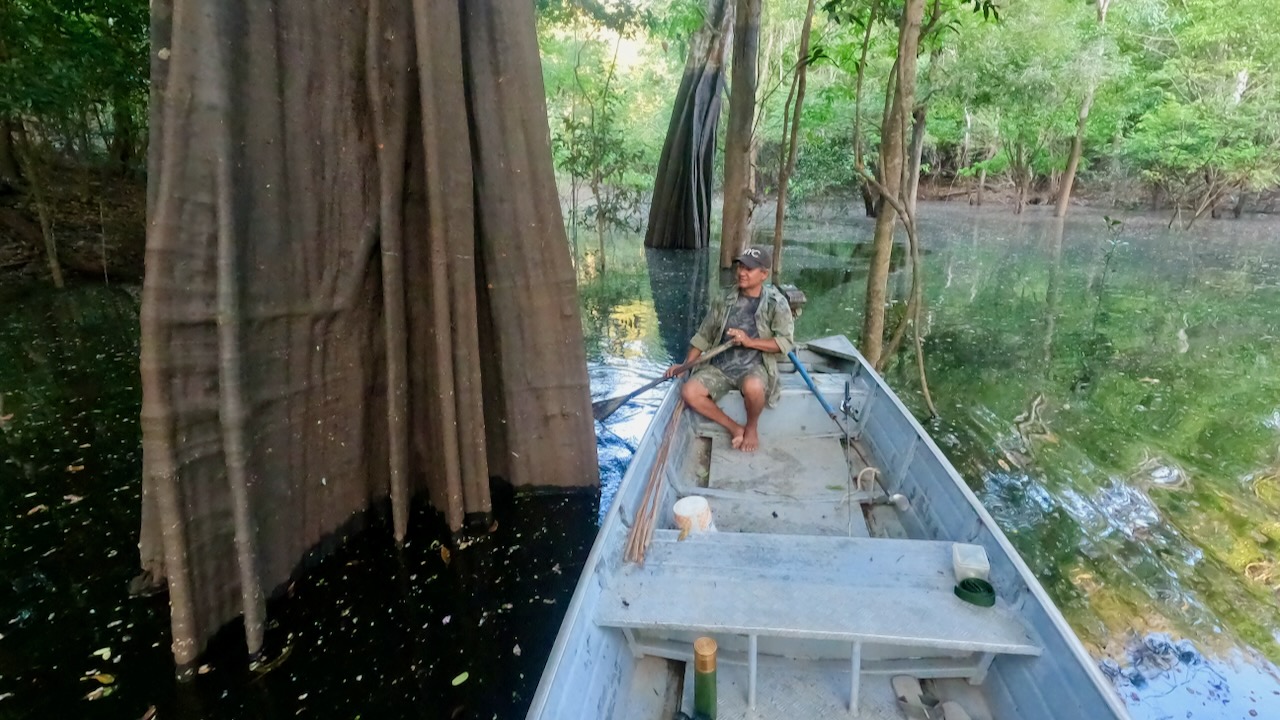
I wake up in the Turtle Lodge after my first decent sleep in days since I stopped drinking and smoking to purify my body for the trip. I take breakfast in the lodge, which is our starting point, then meet up with my local guides Marcello and Daniel at the docks. We pack our large canoe with supplies and then head out through the ‘Igapó’ backwaters, propelled by a trolling motor.
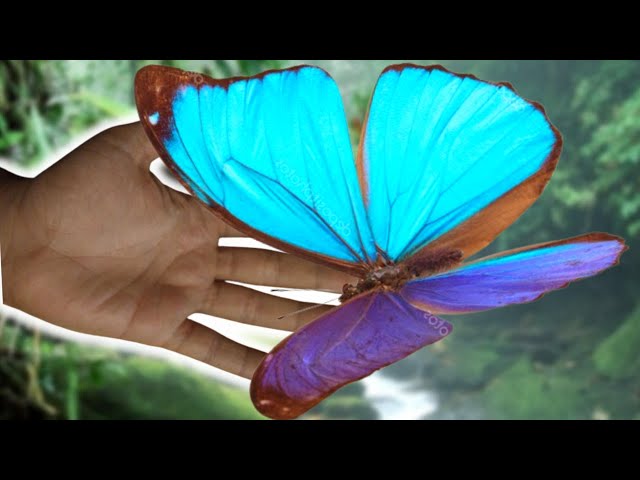
Our first exotic sighting is a massive, Blue Morpho Butterfly with a 12-inch wingspan, which flutters around our canoe curiously.
(Blue Morpho Butterfly illustration)
After a few hours we reach our jungle campsite. The infrastructure is there with some logs thatched together in a small clearing. All we have to do is hang a tarp overhead and put up three hammocks with mosquito nets.
At mid-day my guides are resting and I decide to go on a little trek through the jungle with my machete. I bring no water and get lost for nearly an hour in the thick jungle, which freaks me out. I find a spot with water, splash my face, and then back-track, calling out for Marcello, until I hear him making a ‘woofing’ sound in the distance, which soon leads me back to camp.
Later we head back on the river, looking for animals. We’re paddling through narrow backwaters and the reflections of the trees in the water are magical.
(Marcello and Daniel navigating our canoe through the backwaters)
We see some Cappuccino Monkeys jumping across tree branches and toucans, macaws, and parrots are perched overhead.
All the exotic birds are in pairs watching the sunset, just like the Brazilian couples do on the beach. I’m watching the differences between the human and animal kingdoms melt away, as the jungle reveals we are all one colorful collective.
Day 2 — Piranha Fishing
We’re paddling through the river to a spot where Daniel has set a net to catch our food for the trip. Daniel pulls the net to reveal more than ten fish he painstakingly detangles.
He pulls a variety, including pacu, monkeyfish, and a piranha which has crazy eyes and teeth and flops around in the boat like a madman. We later go fishing with makeshift poles with pieces of chicken for bait and I pull up a few more small piranhas.
(Daniel flashing some piranha’ teeth in the canoe)
The sun is going down, and the mosquitos start to eat us alive on the riverbanks, so we head back to camp for dinner.
Daniel fries the piranhas on a skillet and I take one on my plate. The teeth are sticking out like it’s still ready to strike. It tastes angry, but otherwise not bad, as I feel the piranha energy transfer into my being.
Later some iguanas come around our camp, maybe two feet long, with their tongues slithering in-and-out. But they get freaked as soon as they see us, and scamper back into the jungle’s underbrush.
Day 3 — Monkeys and Alligators
I wake in my hammock at the butt crack of dawn, hearing something in the jungle that sounds like Satan Himself. The sound is indescribable and fills the jungle with horror. Ten minutes later, Marcello awakes and tells me it’s the Howler Monkey boss, and his blood-curdling wails can be heard from 2 km away.
Later, we’re drifting around the waterways and Marcello shows me many exotic trees, including a Walking Tree, which has many skinny trunks that it uses like stilts to ‘walk’ across the rivers of the jungle over the years.
Marcello also points out trees, of which the bark can apparently prevent malaria and kidney stones if brewed into some tea by the indigenous shamans. A whole pharmacy in the rainforest!
After dark, we head back on the water looking for alligators with our flashlights and headlamps. Near the banks there’s a small one that Daniel quickly pulls out of the water with his hands. It’s a baby Black Diamond Alligator, just over a foot long, which tries to escape, until Marcello tickles its soft belly, making its hind leg twitch, like when you scratch a dog behind the ears.
(Baby Black Diamond Alligator)
The guides teach me how to catch the next one. I spot one with my headlamp, plunge my hand in the water and grab it around the neck with my thumb and index finger, pulling it up into the canoe. I’m sitting with it in my lap in the canoe and meditate. I’m trying transcendental meditation to enter the body of the Black Diamond.
After a few minutes, I’m seeing through it’s eyes and everything seems green and yellow and murky. My eyelids open twice with the double slits — the transparent membrane that allows for underwater sight.
When we come back to camp, I take a quick venture into the jungle with my flashlight and machete. It’s scary as fuck, even just ten minutes from camp, as I’m stupidly wearing flip-flops and looking for snakes below.
An owl is hooting in a tree right at me, something like “Hoot, go back, gringo!” I turn around and return to my hammock. Goodnight jungle.
Day 4 — Swimming and Planning
We’re heading back to the Turtle Lodge and it’s a perfect day, so Daniel asks if I want to go swimming. I’m afraid of the river, since it’s full of piranhas and I have some small cuts on my feet and hands from traveling.
After Daniel jumps in, I say ‘Fuck it’ and follow suit. The river is magical and we swim for half an hour. or so. The Blue Morpho Butterfly (or one of it’s kin) returns to greet us upon our successful return, fluttering overhead.
Back at the lodge, Marcello asks me what I want to do now that the camping trip is over. I ask him if he knows of any Shaman who conduct ayahuasca ceremonies in the jungle. He says he can make it happen, and back in Manaus connects me with a hard-drinking gregarious guide named Armstrong who knows a shaman.
Armstrong says he needs to charter a boat to take me deeper up the Amazon, where he will leave me alone with an indigenous tribe for three days.
I pay the guide.
After three days resting in my hotel in Manaus and buying gear in the market, I meet Armstrong at the docks and head up the Rio Negro, back into the jungle.
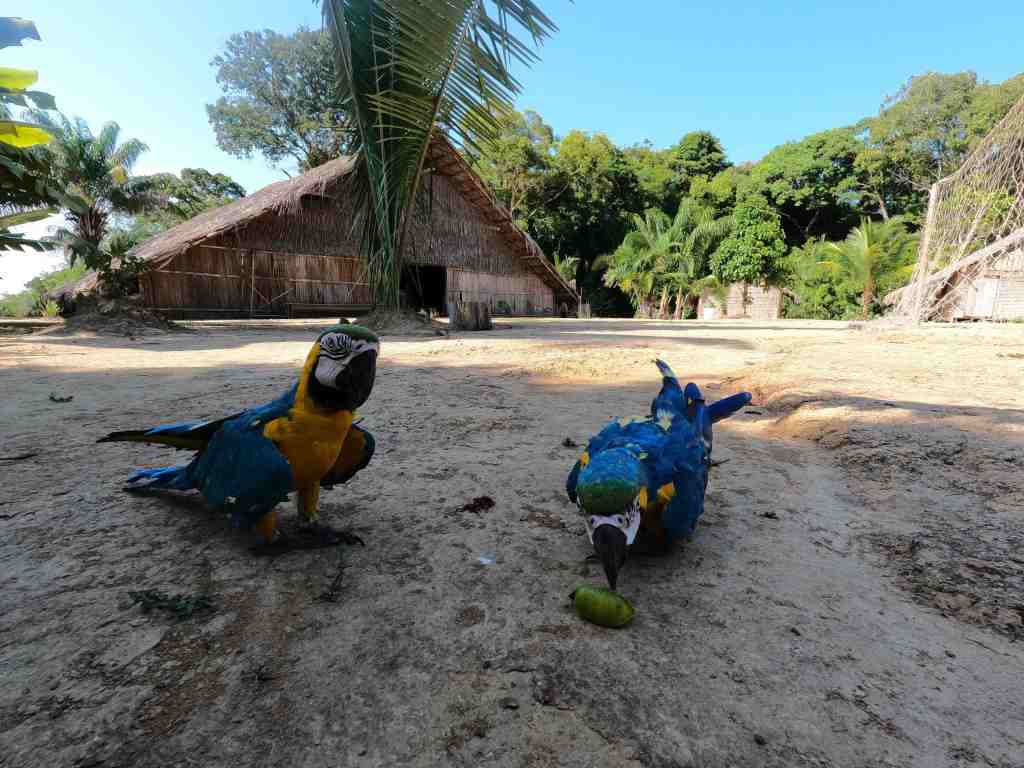
(Macaws outside the tribal lodge where I did my ayahuasca ceremony)
It’s been a long time since I published a travel blog. Does anyone still do travel blogs? It seems like most of the internet is just people unboxing products from Amazon and promoting them via their ‘Influencer Pages’ — thus perpetuating our mindless culture of content and consumerism.
Okay let’s do a blog about shopping:
I traveled India for 14 months from 2020 to 2021 — and when in India you must learn how to bargain for deals in the insane street markets. Here I’m going to share some of my story through purchases, including captions and prices paid — to the best of my memory – which was quite hazy around that time.
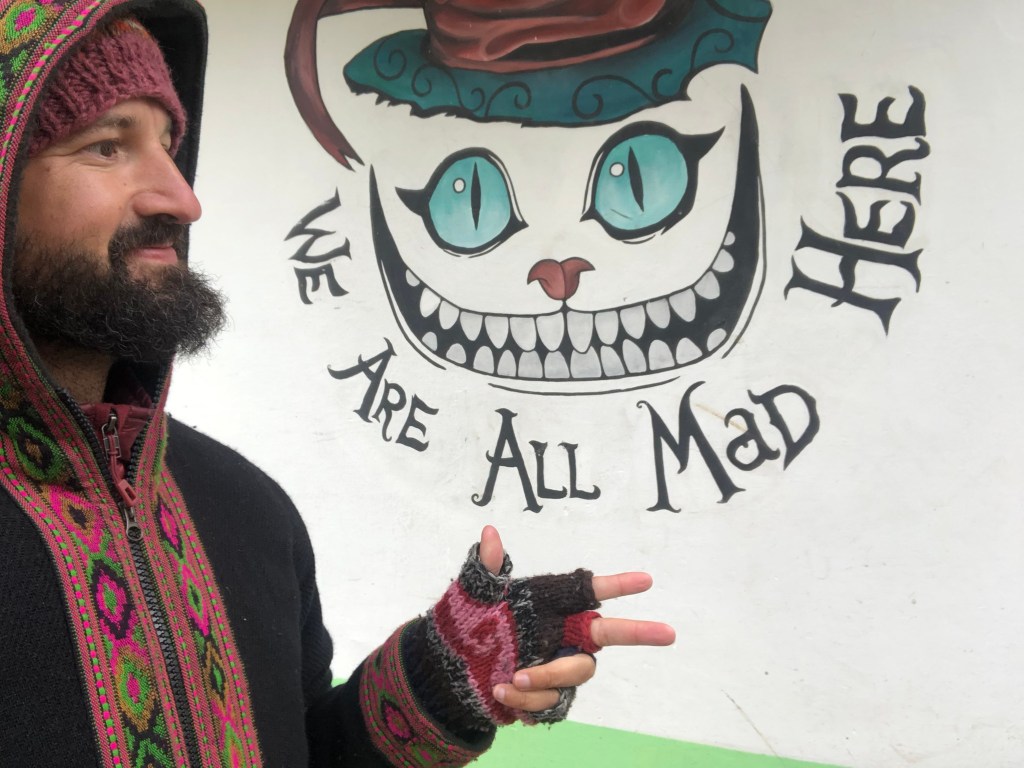
OLD MANALI STREET MARKET — (Kullu hoodie with matching knit hat & gloves: 800 rupees: approx. $10 USD) After six weeks of traveling through the tropical south of India, I arrived in Manali, which is located in the foothills of the snow-capped Himalayas. I realized I had no winter clothes so I bought this outfit in the market just in time, because the next day India administered a country-wide COVID lockdown. I was quarantined in my hostel (pictured) for 72 days and needed this outfit to survive through the final winter months, as our hostel had no heat or indoor dining area.
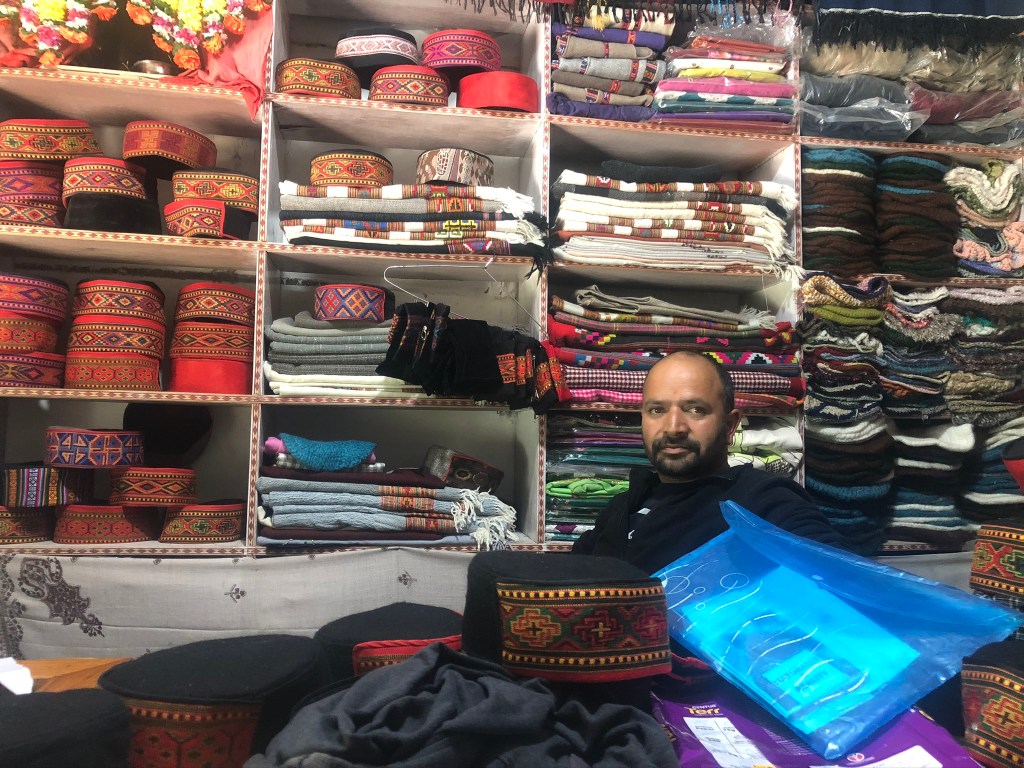
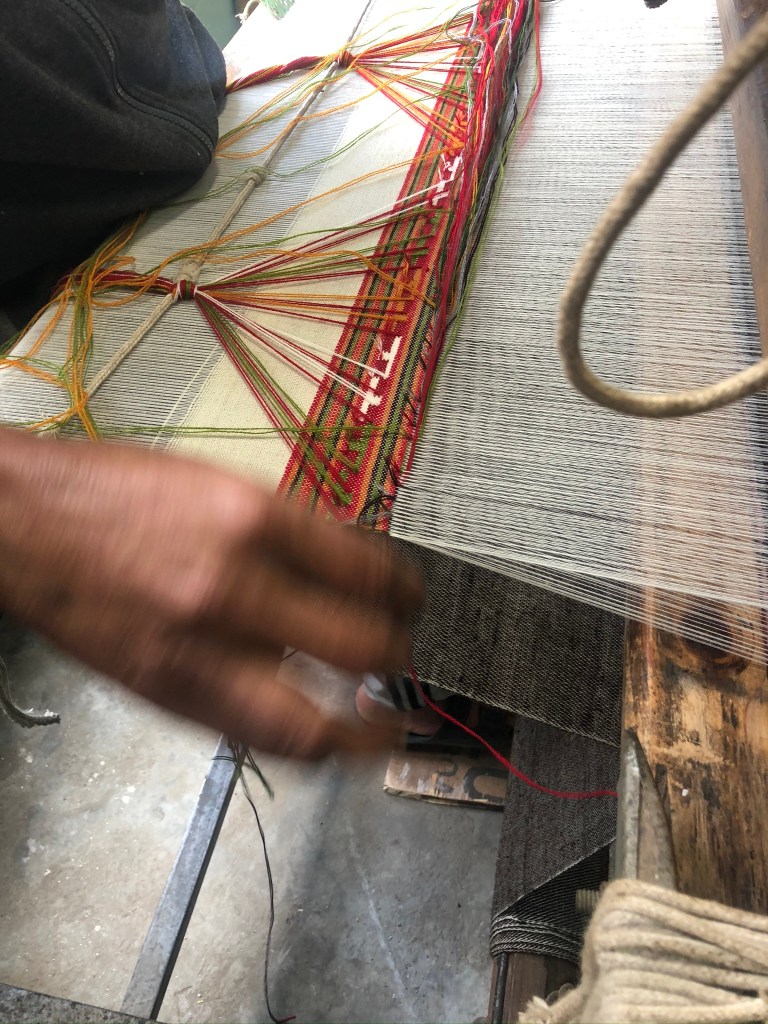
Right after lockdown I bought two hats and shawls from this local vendor Arun, which are traditional to Manali and made of yak and angora wool. I can’t remember how much I paid, but it was quite costly, as they are made by hand on-site. Later Arun invited me and my friend Chris to his house for a dinner party with a dozen men wearing these hats, eating goat curry and getting trashed on some sort of white, local moonshine.
Arun showing us how the Kullu shawls are made on the handloom behind his shop.
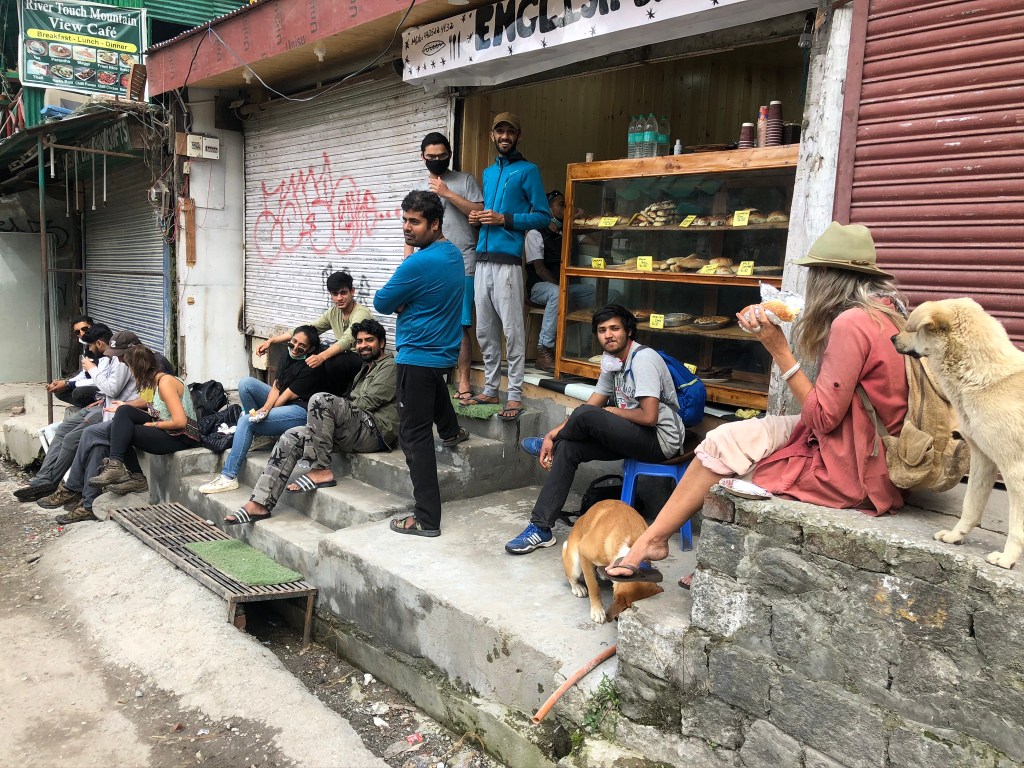
MANALI ENGLISH BAKERY — This was one of the first restaurants to re-open after lockdown, and it became a daytime hangout for our crew: ‘The Manali Renegades’ (partly-pictured). I usually ordered a double-espresso and a sandwich or piece of cake, which probably cost about $1 or $2 total.
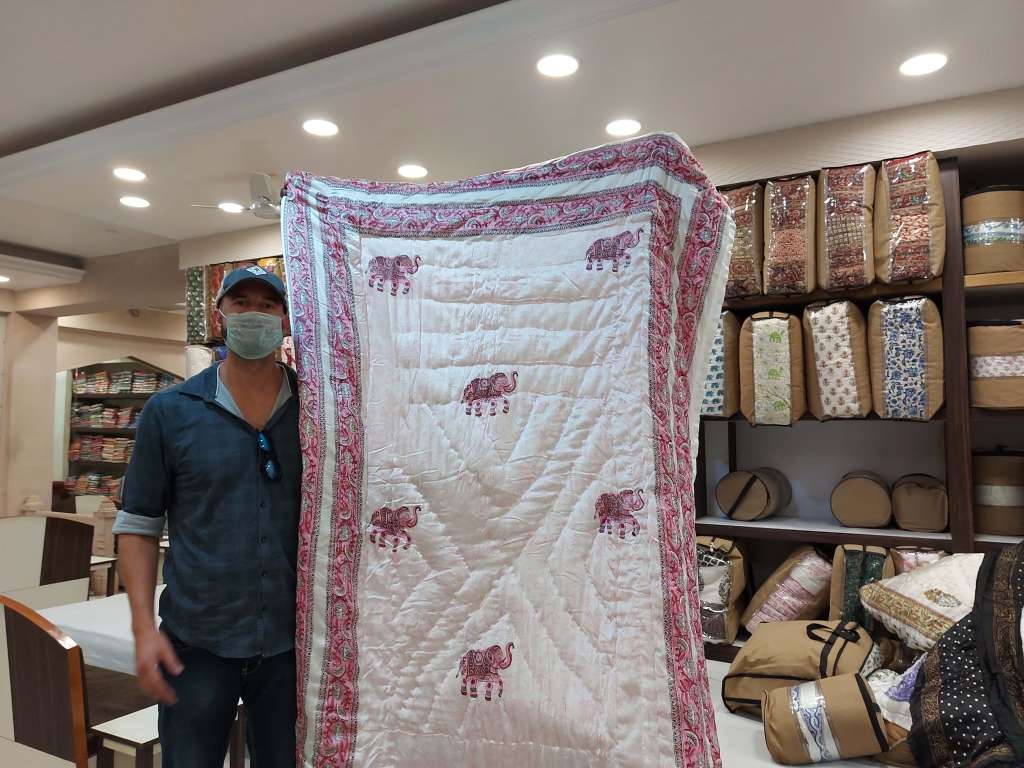
AMBER PALACE, JAIPUR — After lockdown I continued traveling and found myself in this luxury textiles market below the Amber Palace in Jaipur. I bought two of these silk quilts for my aunts back home. I know exactly how much I paid because I saved the receipt: 12,765 rupees including shipping back to Wisconsin = $178 total cost. (p.s. — the quilts arrived at my aunt’s house approximately two months later.)
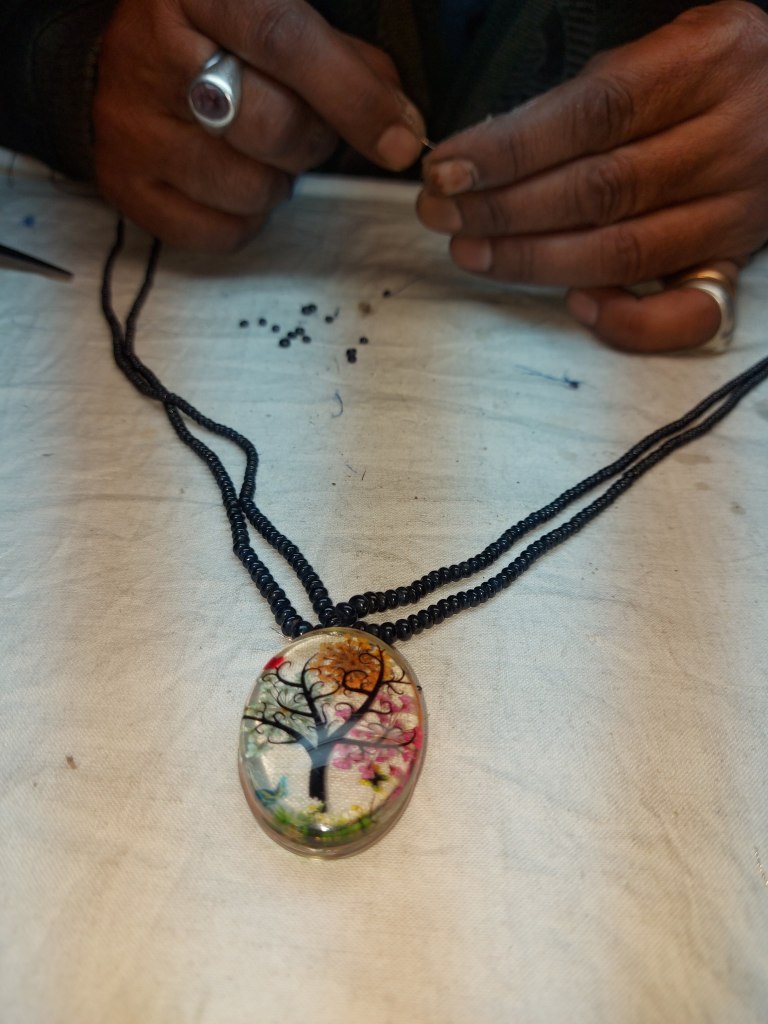
JAIPUR GEM MARKET — (400 hand-cut blue sapphires — 18,000 rupees = $250) In Jaipur I received a palm-reading, which was included with my silk quilts purchase. The mystic foretold that I must wear sapphires for protection, so I headed to the famous Jaipur Gem Market. I bought 400 small, blue sapphires, which the jeweler threaded into a chain for this pendant, which was a gift from a friend. The pendant later broke off because it was too heavy, and I had it replaced with a small opal-stone in the shape of a palm leaf.
As for the protective properties? Well, I was wearing my sapphire chain when I was hit by a truck on my motorcycle in Goa. Sounds unlucky, but I escaped with no life-threatening injuries. Verdict: worth the 18,000 rupees, and I still rock the chain as of today.
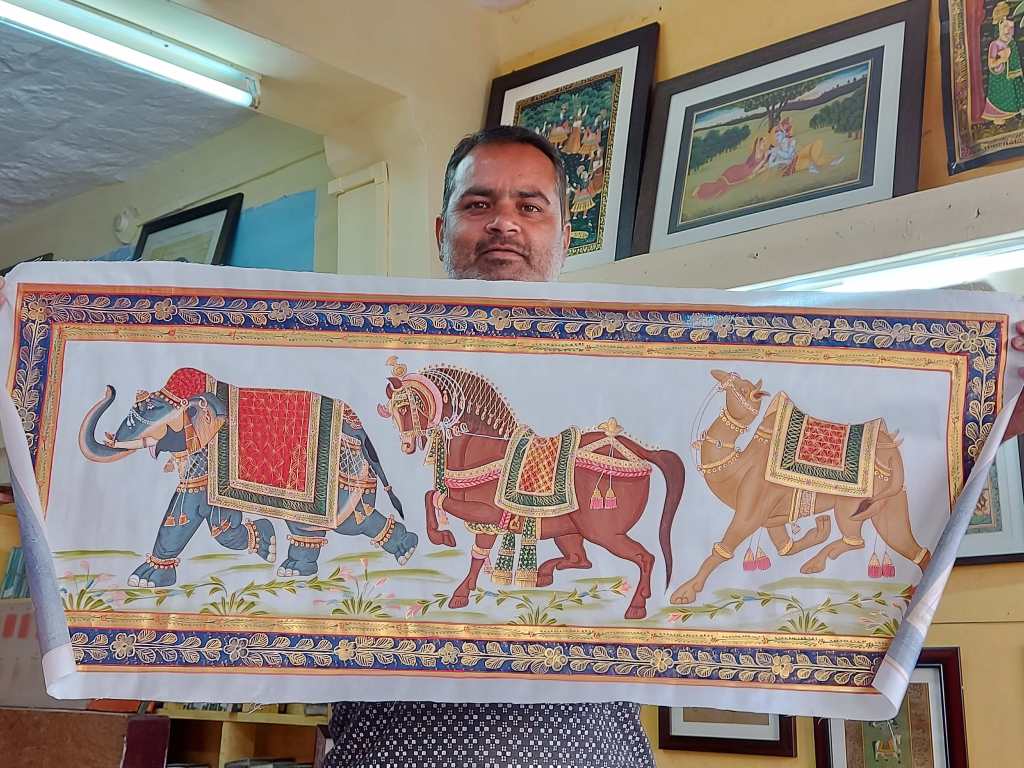
JAISALMER FORT — LOCAL ART GALLERY (3 pieces of hand-painted artwork: 5,000 rupees or $70) I was staying inside the Jaisalmer Fort, which is one of the few ‘living palaces’ in India. One day I walked past this artist’s gallery and he invited me in, but I said “Tomorrow, my friend.” The next day, I walked past and he said, “It’s tomorrow, my friend, you must come in!.”
So I entered and bought three pieces of art to ship back to my family in the US. This was the biggest piece and now is hanging on my dad’s wall in a frame that costs 10 times as much as the art. My negotiating skills were clearly improved at this point, which marked nearly 1 year of traveling India and bargaining for treasures.
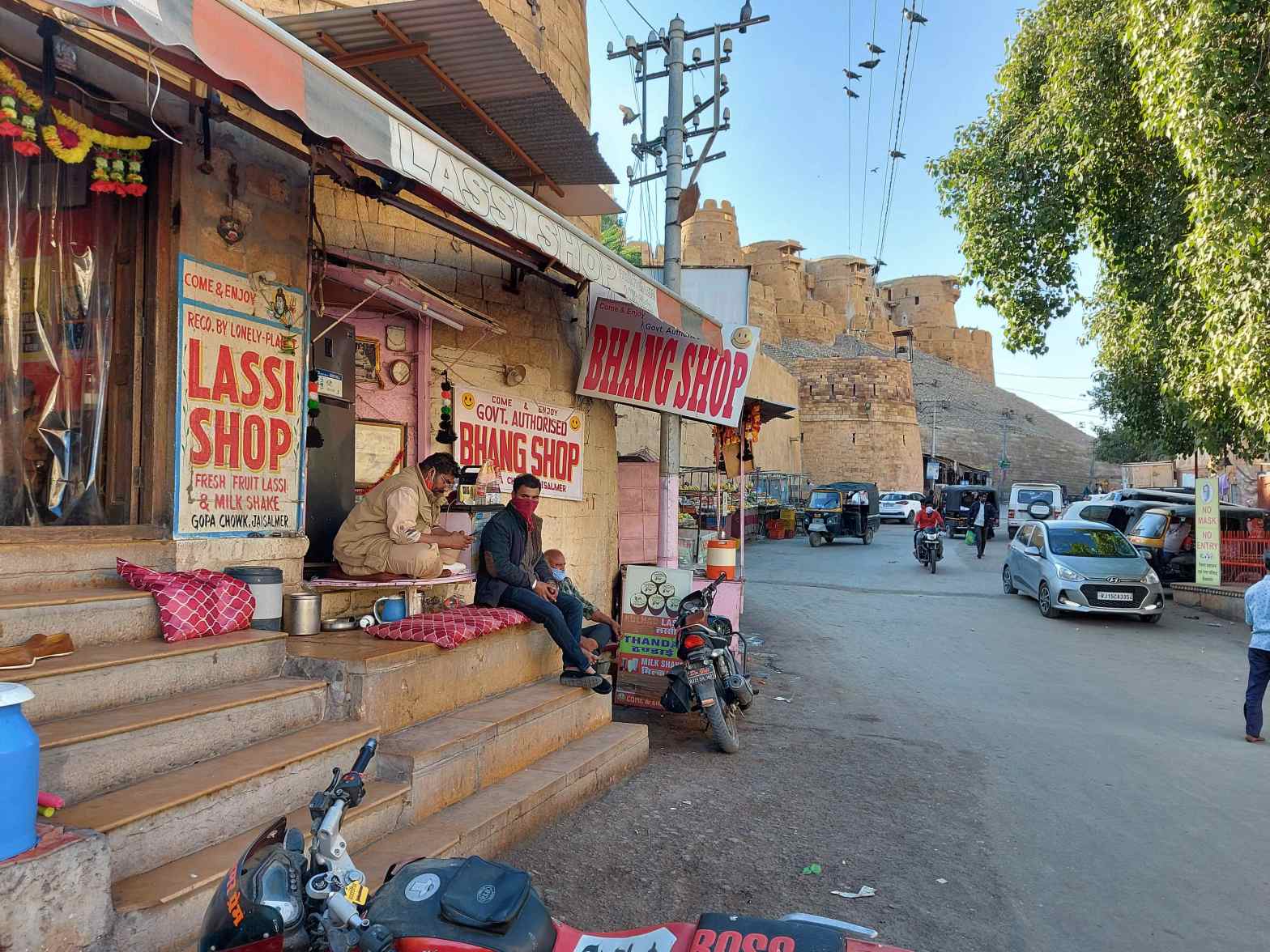
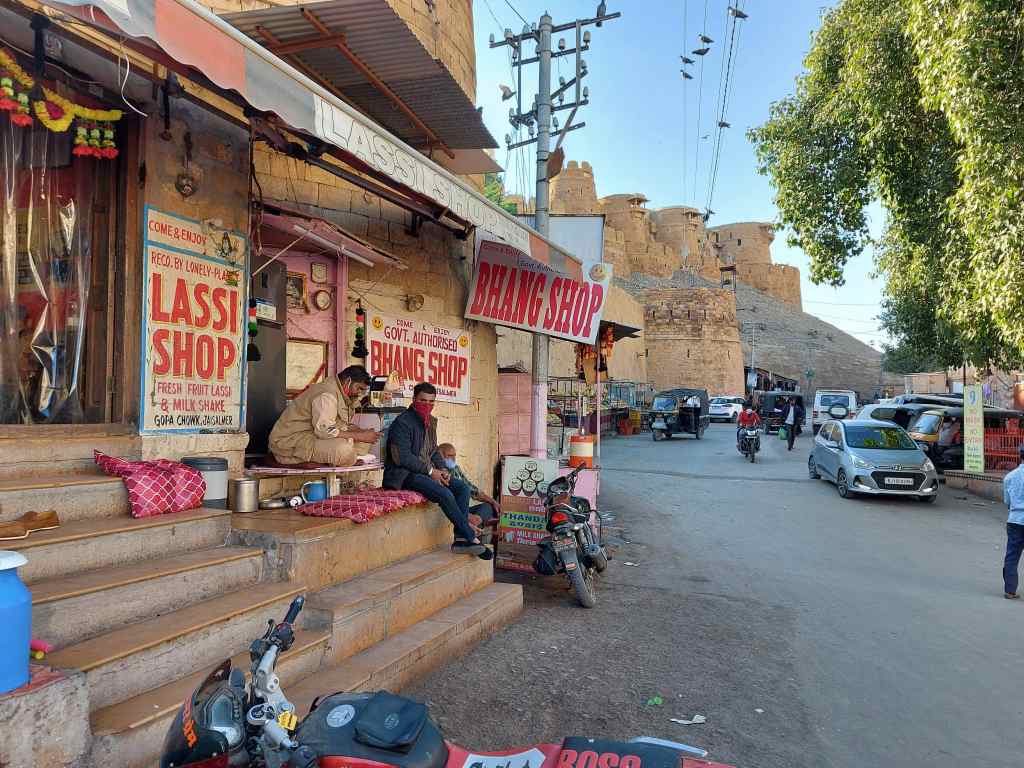
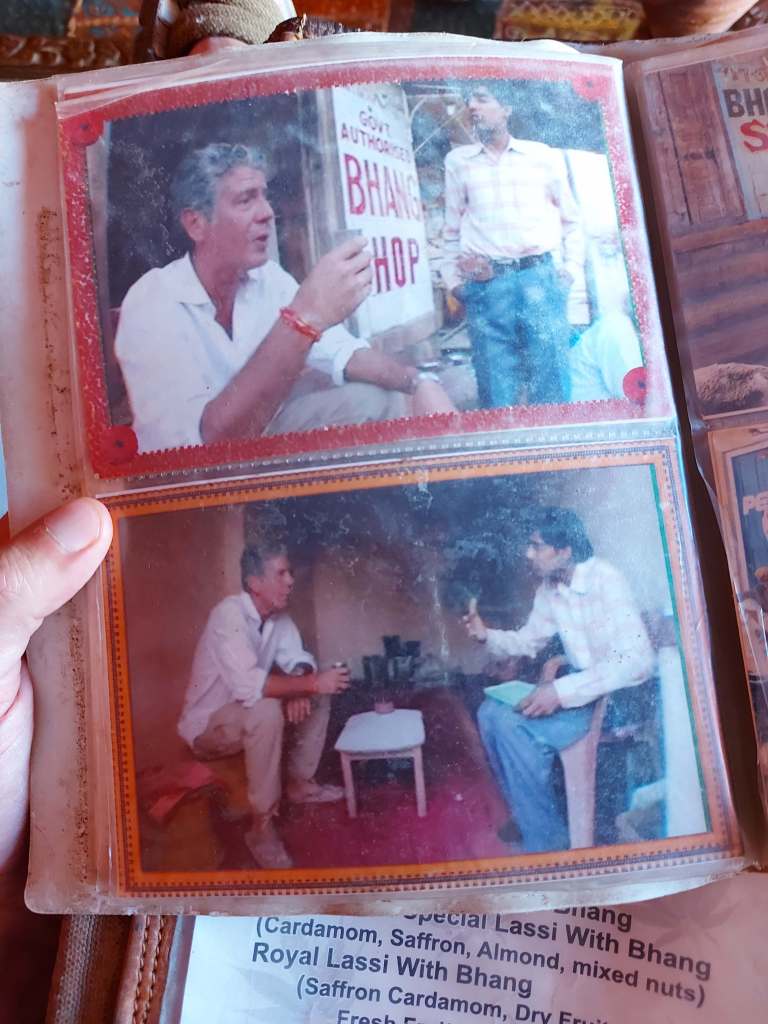
JAISALMER FORT MARKETPLACE: Bhang Lassi, Fullpower Edition (approx. $3) Here you can see the Jaisalmer Fort in the background where I was staying in one of those turrets ($24 for the hotel suite, COVID-special). This is one of the few government authorized shops in India that sells “Bhang Lassi” which is essentially a bright green marijuana-infused milkshake. I drank one right before embarking on a camel camping safari trip in the desert, which made that experience quite dreamy.
After I ordered my Lassi, the owner showed me a picture of Anthony Bourdain in his shop sipping on the same beverage: a “Royal Lassi with Bhang.”
For the past several years I’ve used this site to bring you some High-Octane Travel Blogging Adventures Extraordinaire. However, due to a downshift in life-pace and in the interest of preserving my internal organs, I don’t have many of those to report out today. So I’m experimenting with a new blog format.
Let’s start with an excerpt from another ‘Renegades Logbook’ of sorts: Jack Kerouac’s ‘The Dharma Bums.’ Originally published in 1958, it’s a sort of backpackers’ ‘On the Road’ replete with freight-hopping Cali beatniks and mountainside Buddhist meditations. Please enjoy and stay tuned for more Renegade Literature excerpts to be forthcoming, posthaste.
An Excerpt from Jack Kerouac’s ‘The Dharma Bums’:
‘Get yourself a hut house not too far from town, live cheap, go ball in the bars once in a while, write and rumble in the hills and learn how to saw boards and talk to grandmas you damn fool, carry loads of wood for them, clap your hands at shrines, get supernatural favors, take flower-arrangement lessons and grow chrysanthemums by the door, and get married for krissakes, get a friendly smart sensitive human-being gal who don’t give a shit for martinis every night and dumb white machinery in the kitchen.’
I haven’t written a proper blog for a while mostly because I’ve been busy with work and such, but truly because I couldn’t think of anything original to write … until now.
Drumroll…welcome readers to the ‘Inaugural Renegade Flag Review!’
Seriously, who reviews a flag? I dunno…”Who throws a shoe?”
Random Tasks both, so here goes:
If the Brazilian Flag were a beauty queen, it would be Miss Universe because it has the universe draped in a sash, tucked inside a flag.
But this is Brazil and in Brazil you must use Portuguese, so let’s call her “Miss Universo Paralello,” which is really the name of a wild music festival. I’ve never watched the Miss Universe pageant, but I have been to Universo Paralello and walked down many a beach in Brazil, and can assure you they beat any beauty pageant.
The official title of the flag is “Bandeira do Brasil,” which is a feminine noun, thus the “a” on bandeira, and my ‘Miss’-appropriations.
According to wikipedia, the flag was officially adopted following the ‘Proclamation of the Republic’ in 1889 to replace the flag of the Portuguese Empire of Brazil — which was also pretty baller-looking.
In the new flag, a celestial globe with white, five-pointed stars replaced the arms of the Empire of Brazil — its position in the flag reflects the sky over the city of Rio de Janeiro on 15 November 1889. The motto Ordem e Progresso is derived from French Philosopher Auguste Comte’s motto of positivism: “Love as a principle and order as the basis; progress as the goal.”)
— from Wikipedia, “Flag of Brazil”
That’s all important history … but wait, I just googled, “Brazilian Miss Universe Winners,” and there are none. Meanwhile, the United States has the most of any country?!? — DOES THE CONSPIRACY NEVER SLEEP??? I DEMAND A SPECIAL COUNSEL INVESTIGATION!!!
According to WorldAtlas.com, Brazil is the largest country in the southern hemisphere, and while it’s size is 500,000 square miles smaller than the total area of the U.S.; after you take out Alaska, Hawaii, Puerto Rico, etc., Brazil is actually 300,000 square miles larger than the contiguous United States.
Wait, what’s the point of this blog? Why so many pictures from Austin Powers, International Man of Mystery? Wasn’t I supposed to be reviewing the Brazilian Flag and how do I even complete this task, ranking unusual flags?
Okay, according to PicVisa.com’s list of ‘Most Unusual Flags’, the Flag of Mozambique has an AK-47 on it, which is certainly unusual, but I’m more of a lover than a fighter.
And there is a lovely beach in my current location of Florianopolis, Brazil called “Moçambique” which has amazing sand-dunes, and no AK-47s to contend with to my knowledge.
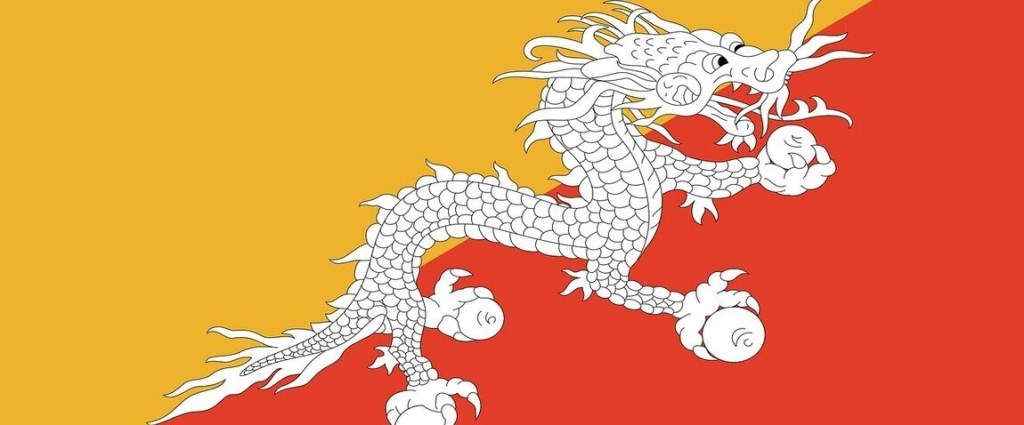
The Kingdom ofBhutan’s Flag has a white dragon named “Druk”, which is also known as the Thunder Dragon, which is pretty interesting, I guess. But mostly it looks like an unfinished tattoo, or a banner from some Chinese Game of Thrones knockoff.
As you know from the last page of emojis, most other countries have boring tricolor type flags. But no three colors as nice as Brazil’s deep green, blue and yellow. So, after my extensive PhD-caliber research, I’m going to go ahead and rank the “Bandeira do Brasil” as ‘WINNER of the ‘Inaugural Renegade Flag Review!’
I like to think that the Bandeira’s celestial globe depicts the early universal energy burst of stardust flung billions of miles across our galaxy, reforming amidst the flag’s green backdrop of the Amazon jungle, thus spawning terrestrial life as we know it; in the spiritual, primordial, Pantheist sense.
So thank you for reading this blog to its ridiculous culmination, and here’s a picture from Rio’s Carnival as your reward.
Now please excuse me while I google: “Tickets to Carnival.”
Follows are writings from my travels through India and South America from 2020 through 2022, published in various newspapers and digital outlets.
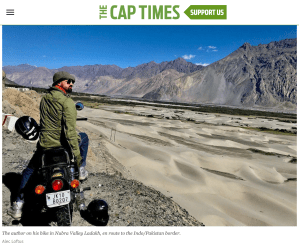
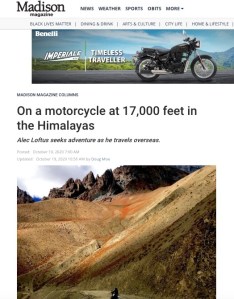
Additionally, one magazine feature on my high-altitude expedition through the Himalayas with LA Riders Motorcycle Club, and a presentation to seniors at the Milwaukee Institute of Art & Design … enjoy!





















 renegadeslogbook.com